Meet a Leader- Pedro Casillas

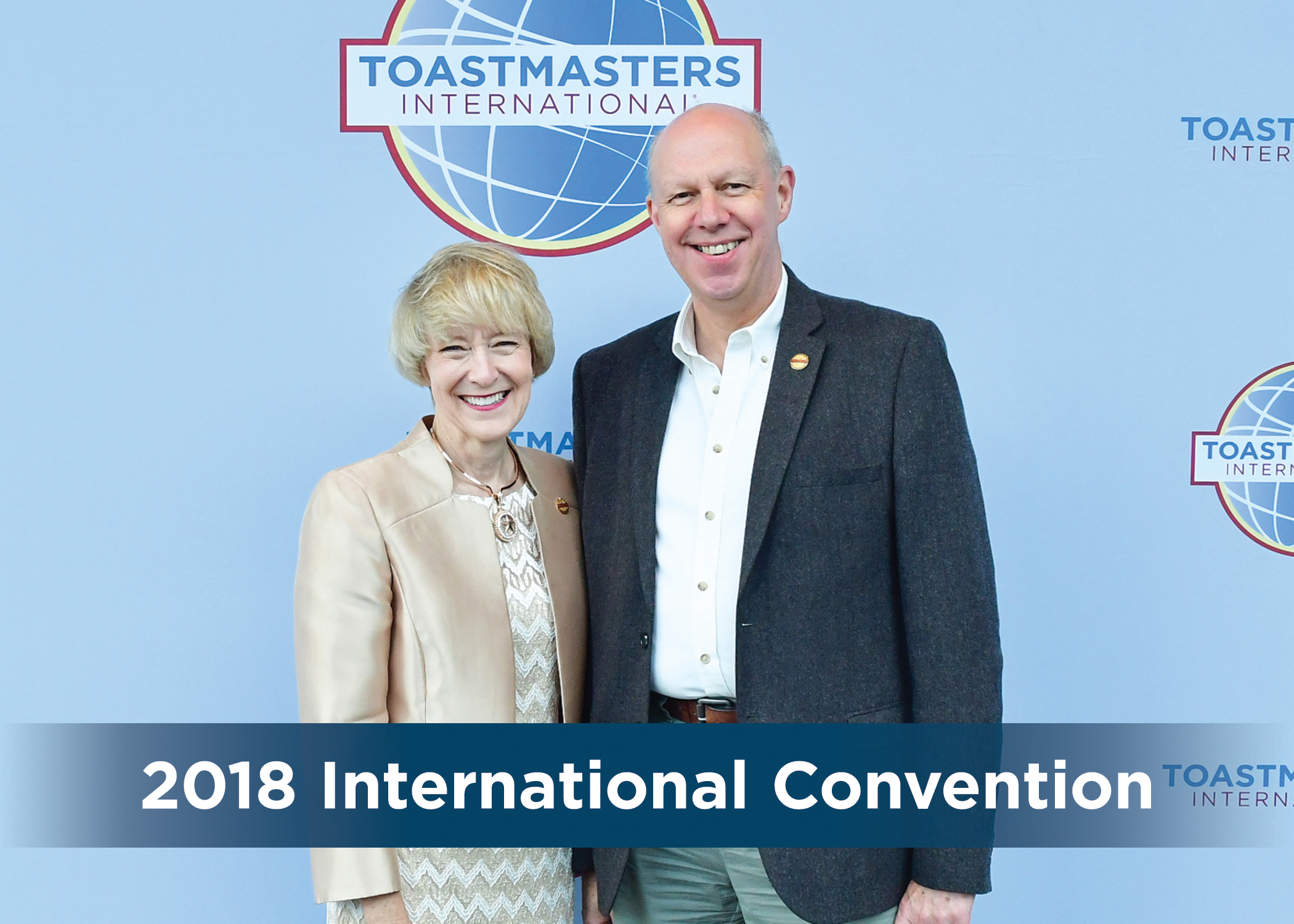
Pedro Casillas, District 91 District Director 2017/2018 inspires us with his story

1. What has been your journey with Toastmasters? 

I joined Grosvenor Square Speakers, (the first TI club to be set up in London), TI in 2002. During my time with TI, I have taken on many roles, (some more than once), from VPM, VPE, Treasurer, President, through to Area and Division Directors, through to being District Director last year. This year I am supporting the District in my role as Immediate Past District Director as well as helping my home club as Treasurer.
Over the years, as one would expect, I have learned to speak well in public; lead various teams; lead workshops and mentor many members.

2. Congratulations on the awards that District 91 were presented in Chicago. Tell us something more about it. 

Each year, TI challenges every Club, Area, Division and District to be the best they can be and to deliver exceptional benefits for ALL members. One way to measure this is the District Success programme, which measures how well the District is doing (the programme is broken down from District to Division to Area and Club level). Districts are judged on the number of new clubs created, the number of payments received and number of Distinguished clubs. Last TI year, 2017-18, D91 achieved the second highest award, ‘Select Distinguished District’ award. D91 finished 11th in the world out of 118 District, which is a fantastic achievement. In addition, D91 finished second in the world, with 80% + of our clubs having more than 20 members. What makes me most proud, is looking back on how well EVERYONE across the District contributed to our success and have helped to lay the foundations for continuing success.

Read more

Volunteer First

Many new initiatives aimed at fulfilling the 1 – 70 – 100 vision are about to be started in the coming weeks. You too can be a driving force in helping the District achieve this vision and become a better leader in the process. We are looking for volunteers to take on the following roles:

Corporate Liaison Officer – Would you like to expand your network in the corporate world and to be the face of Toastmasters in the corporate world? Join our team of experts supporting corporate clubs and open new doors for you in the business world! You will be responsible for visiting corporate clubs, organising networking events and corporate summits to support our corporate clubs and their leaders.

Read more

Embrace New Challenges

Life has been challenging recently so I hope you will indulge me as I reflect on my experiences.

We each have a different reason for joining Toastmasters, albeit with a common aim of improving some aspect of ourselves. We also have different reasons for staying as members, as long as we continue to feel we get some benefit.

My Toastmasters journey began nearly 18 years ago when I decided that I needed to improve my ability to deliver presentations and training, and to better deal with questions in public meetings. I found that delivering prepared speeches and evaluations helped with the former, and Table Topics gave me the skills and confidence to cope with the latter.

After eight years of personal growth and great leaps in my self-confidence, I reached a point where my enthusiasm began to wane. It was at that point that I started a new club, County Communicators. The experience of seeing a group of 20 new Toastmasters embarking on their own personal journeys was inspiring, and made me realise how much I could give back by supporting others.

Read more

Respond as if you mean to go on

By Steve McCabe (HOD Speakers)

If, like me, you joined Toastmasters to rid yourself of a public speaking phobia that curses you every time someone mentions the word, ‘presentation’, you’re in good company. The fear of public speaking is in the top three of most common global phobias, worldwide.

Here, I’d like to give a brief review of how anxiety attacks can ‘make us stupid’, whenever we’re pushed out of our comfort zone. I will also offer some ideas that can add to the hugely valuable Toastmasters benefits you’re accruing. We’ll also look at the biochemical changes in our body that leads us to behave in a way we all recognise.

One fact that is widely recognised is that a fear of public speaking is a form of social anxiety; a fear of being judged negatively in public. It is a phobia that afflicts many, including the most prolific stage actors and musicians. What we also know is that, social anxiety and public speaking in particular, is frequently a consequence of a significant emotional event that happened perhaps many years ago, perhaps as a young child, or perhaps a more recent one; an event that looking back now, may seem as trivial as classmates laughing as we stumble through our reciting of the times-tables standing at the front of the class. We’re not born shy and we are not born phobic. Look at the young child, how he or she fails and fails again without fear.

It’s the events and environment we experience as we grow up that shape us, many of us responding differently to similar experiences, helping to build belief systems that in many cases, hinder rather than help you.

We also know that 95% of our behaviour is driven unconsciously. Without any conscious thought, we change gears as we drive our car, we sit down on a chair that from previous learning, we know will support our weight. This is significant because when we fall into a state of panic at the prospect of an upcoming presentation, our unconscious mind compares this future speaking event with your memory. If your unconscious recalls links to an earlier adverse event, bingo, you develop the flight or fight response.

Then there is the question of beliefs we hold about ourselves. If we expect to fail at an interview or in a game of tennis, guess what? We do. We fulfil the prophecy our beliefs have set us.

The beliefs we hold about ourselves, are either empowering or limiting. The positive beliefs are welcomed, but those causing you distress, are the limiting beliefs. We begin to build our belief system again from an early stage and it’s easy to see how, no matter how competent a speaker you are, holding beliefs that set you up to fail in your presentation is not going to help you do well. Result? You’ve become emotionally hijacked.

Medically speaking, however, the feelings brought about by anxiety are absolutely necessary. It is the inappropriate anxiety that is unwanted. In the days when our prehistoric ancestors were threatened by the peril of a ravenous sabre-toothed tiger prowling outside the cave, our bodies rightly put us into ‘flight or fright or freeze’ mode; we needed that sudden adrenaline surge to either run for the hills or take arms (as if you’d ever stand a chance with a sabre-toothed tiger and a branch) and fight off the blighter.

Let me give an example. Fast forward to today and your colleague asks if you’ll cover for him or her while they take a well-earned holiday. ‘Sure, what’s the deal?’, you ask. ‘Oh, it’s just an update’ to the management team,’ they tell you, ‘a forty-minute presentation on our current performance.’

Read more

Why? What if……?

By Gill Ornstein(President of HOD Speakers)

Becoming comfortable with the format, requirements and challenges of Toastmasters took a good few years.  Why did I join?  My work is training and facilitating and I needed to ‘up my game’.  It is easy to become complacent when you have the knowledge and start coasting….what an insult to your audience!  Talking endlessly (as I do!) with a TM friend who adores challenges we knew that the TM meeting approach could be applied in so many directions.  We mused ‘what if….’ and, after getting backing ‘Speak Up, Speak Out; programmes for 14-16 year olds was started and over five years 2,000 students had been involved in the 12 week programme reported on in the press at prestigious offices in the City. This has now been taken over by the Peachey Foundation and is proving its value to all students.   It is vital these young people, so very able to communicate by social media but lacking in knowing how to be effective face-to-face, to structure all that they do/say, appreciate the right use of language and project themselves to impress. And have fun!

So…..what now?  Personally I have been asked to run programmes within the voluntary sector e.g. Victim Support and Samaritans .  Not only are volunteers needing the confidence that clear, sound appropriate skills can provide, but the police when giving evidence in Court, and in choosing an empathetic, direct way to inform victims and families of what has happened or going to happen.  And for those who are out of work whose confidence may have taken a battering? I regularly run seminars demonstrating how able they are and provide evaluations that, hopefully, are supportive but honest and constructive.

I run school programmes, not only for the schools in which you may consider are disadvantaged students but in public schools the students have been eager to learn the techniques offered by Toastmasters.

Read more