My Journey

Image result for Indra toastmasters

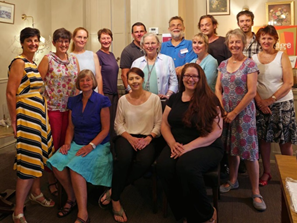
By Indra Sikdar, Harrovians Speakers Club, DivL Area61

I joined Toastmasters in 1999.  I had been working but found it quite hard at the time to make friends at work and secondly to work in a logical and chronological manner (tackling a project step by step).

Initially, I found out about Toastmasters after reading some American self help books which implored the reader to attend and to use the organisation as a laboratory to practice public speaking.

The first club I joined was Athenians in Hammersmith and then soon I checked out another club called City of London Speakers Club which met at Liverpool Street (I transferred my membership there).

At the time City of London Speaker Club had less members and so I did not feel as initimidated to start my public speaking journey at that club.

I only spoke without notes when I gave my 10th speech (Competent Communicator).

I remember my first meeting where I was so impressed by the speakers that I felt like getting up and speaking in front of the audience myself !

I always felt that Toastmasters was a good organisation to join – as it is dedicated to self improvement and of course the self improvement generally only happens through team work.

I have tried almost all the roles including Area Governor, President, Secretary, Treasurer and many others roles as the need arose from time to time.

In 2001 I spoke to Imke Halberstadt and she mentioned that she wanted to start a club in Harrow – and as I lived in the London Borough of Harrow – I welcomed a local club.

I remember the day that we launched Harrovians in a pub in Wealdstone.  Imke was on the case assertively recruiting the requisite number of members to launch the club.

Since that day we (Harrovians) have met in a variety of locations including other pubs, Community Halls, and Churches.

We have had our ups and downs but as a club we have kept the vision alive to provide communication and leadership opportunities for the people who live in and around Harrow.

With my own personal journey I went on to receive the prestigious Distinguished Toastmasters Award (after five years).  Prior to that I met with Alan McMahon and we planned for how I would complete the DTM: what assignments were left, what speeches I would do and when.

I have in the past spoken at Speakers Corner, given a Seminar at London Metropolitan University, given a Sunday Service at a Church, spoken on radio and even given a variety of talks at Government Offices.

I now find it easy to make friends and am happy to network and talk to a variety of people, often this experience turns into team working opportunities. 

At present I am looking at an opportunity to do some voluntary work for an English Community Group and am looking at ways to modernise the organisation, make it more inclusive and to blend both my traditions Indian and English into my narrative (if asked to speak) and to understand, English history, culture and where we are today as a modern society.

The lessons I have learned from Toastmasters are:

* When you find something good – take the plunge, find out about an organisation, join and get involved.

* Be consistent in turning up and trying the roles.

* Seek opportunities and when they arise – take on those challenges.

* It is important to have a clear vision of where you want to get to and broadly to stick to that destination.

Don’t shove them in a drawer

By Lynne Cantor, Excalibur Speakers, DivL Area9

Image result for Lynne Cantor toastmasters

‘You must come’. 

‘You need to come’. 

‘You’ll love it’.

I am not sure ‘love’ was the right word back then but twelve years on and I do love Toastmasters. Initially cajoled by a friend to come along and then I was hooked.   It’s funny, we go to hundreds of meetings and often can’t remember what happened when, but we do tend to remember our first meeting.  The girl with the Australian accent, now a dear friend, the guy with the stutter who now runs comedy shows and the visiting speaker talking about body language, a topic I now present on myself.  I’ve a lot to thank my friend for. Bring a friend to your next meeting, the more who know the more we’ll grow. 

I joined the all women club, Women in Banking and Finance – City (now City Women Speakers), a year after it was founded.  I was quickly co-opted onto the committee as Vice President Public Relations.  Do take on a committee role, over time try them all. You may feel ‘how did I get here, what am I supposed to do?  PR was not exactly in my comfort zone.  I had never produced publicity material or written a newsletter. I always think that when you find yourself in that position, you just have to get stuck in.  I found I enjoyed talking to members and getting their stories, researching speaking tips and finding pictures to enhance content.  There was less social media and online activity then than there is now and our newsletters were often printed and handed out.

As I started to enjoy Toastmasters I began to look a little wider than my home club.  I would go and General Evaluate (GE) at other clubs.  There are so many wonderful clubs around each with their own unique feel but all offering the opportunity to learn, develop and grow your speaking ability.  Go visit other clubs, be a GE or simply observe, there is much to gain.   

Workshops are often on offer with great speakers sharing their skills and experiences.  I always come out motivated and buzzing. I also take loads of notes that used to end up shoved in a drawer.   I’ve since learned the hard way not to do that.  When you take notes, use them, don’t lose them.  Go to the workshops, they are usually free.  One of the workshops that interested me was how to be better at evaluations, presented by two former District Evaluation Champions.  For me, having to gather your thoughts in a few minutes, structure a speech and make the speaker feel motivated seemed a tall order. I came out bantering with my friend as to who would win the next ‘Best Evaluator’ ribbon.  My friend did……… every time for two years.   ‘How do you do that’ I asked. It turns out she had implemented all the advice from the workshop whereas I had shoved it all in a drawer.  Ouch!

It was competition time.  ‘Come on members’ declared our President.  ‘Step up.  We need contestants’.  ‘I will if you will’.  Over the years I’ve noticed that some clubs have lots of contestants whereas others have very few.  More chance of winning in the latter!  Contests are a great way to help you up your game.  Always give competitions a chance. Sign up and enter. I’ve heard speakers who have been in Toastmasters for less than six months go all the way to the International competition.  You never know how far you can go unless you try. 

I never entered the evaluation contest to become a champion.  I just wanted to beat my friend, just once.  My friend won best Speaker and I, finally, won best Evaluator.   I remember at Area, warming up my brain and getting myself into evaluation mode.  My main competitor who had won at Area for the past three years received a note from one of her friends.  ‘Lynne is evaluating everything in sight if you are not careful she’ll win’.  I did. You wouldn’t go to the gym without warming up, so why evaluate without warming up.  You can warm up evaluating other speakers or even the Toastmaster.

Audiences get bigger as you go from Club to Area to Division to District.  The Division contest was in a lecture hall with everyone not just looking at you but looking down at you.  A bit unnerving if you are not used to it.  I had been given tips to remember my evaluation so I could do it primarily without notes, one of those tips was to write the words on a mini yellow sticker and keep it in the palm of your hand.  A brilliant idea in practice but in a contest, when you are nervous, when your hands are sweaty, it doesn’t work.  I wouldn’t recommend going without notes for the first time in a contest, challenge yourself to try it in the safety of your home club.  That said, at the time it was a case of ‘I’ll just have to go for it’.  I did.  I won.  Wow.  Who would have thought putting into practice all those tips and tricks from the workshop would have made such a difference. 

When I run Evaluations workshops these days one of the first things I say is ‘Use your notes, don’t shove them in a drawer’. I actually went through the whole Evaluation competition process twice.  After the first attempt when I came second at District I swore I would never enter a contest again, way too stressful.  When I reflected though on how much I had improved in just three months I knew there was something to be gained.  The following year I came away with the UK and Ireland District Evaluation Championship title.   For the past seven years I have helped others improve their evaluation skills through mentoring and workshops. Nothing delights me more than when a new Evaluation Champion is announced.  These days I have added to my workshops, as well as evaluations I run ‘Speaking without words – the power of silent communication’ which is all about using your body to enhance your speaking. 

My Toastmasters journey still continues and every 2nd and 4th Wednesday I can be found at Excalibur Speakers, D91’s only advanced club. This May I will be at conference.  Other weeks I attend workshops, visit other clubs and absorb the shared knowledge and ideas that makes Toastmasters such a great organisation to be part of.

Lynne’s next evaluation workshop will be on Tuesday 28th May at Holborn Speakers. Rugby Tavern, 19 Great James St, London, WC1N 3ES.  Time: 6.45pm to 9pm.

How to Avoid the Last minute Panic…

By Andy Hessey, Area J4 Director

How many people have signed up for a speech with the words “I’ve got plenty of time” in their heads, only to wake up one morning with drenched in a cold sweat and with  clammy palms followed by the horrible realisation that you are hours away from that delivering a speech to a sea of expectant faces when all you have is a rough outline of your project that you created down at the pub 2 weeks ago after ½  bottle of gin and 5 Tequila Slammers?

Andy Hessey

We’ve all been there and we all know how gut wrenching it is.  Panic sets in, followed by the crushing disappointment that it’s not going to be as good as you had thought it was going to be due to the fact you’ve not had chance to give it the finesse and polishing that turns an average speech into one that can win a contest.

So why are we so bad at planning ahead?  Is it because as Toastmasters we live in the present with our speeches or is it that we just don’t give enough importance to planning them, just assuming that it will be alright on the night?  To be fair, for most Toastmasters, a speech is just another ball to juggle along with family, work and friends etc – but that’s not really a good excuse. 

With my Project had on, I know that with just a little forward thinking, the stress really can be taken out of your prep work, so, allow me, if I may, to share my top 3 tips for planning ahead to make sure that it’s not another last-minute.com speech.

  • Think bigger than the next speech

If you are only planning one speech at a time then you’re not going to get the most leverage out of your time.  I’m not saying that you should plan your entire path to your DTM (I’m not stopping you) but planning multiple speeches is the way to go.  You don’t have to get your entire pathway booked in on EasySpeak from Icebreaker to final project but think about how quickly you want to get, let’s say, from Level 2 to Level 3 by setting that as a goal with marker points along the way.

Having 4 or 5 speeches, planned in your calendar gives you much better visibility of your deadlines.  It allows you to think ahead as to where you’re going to long days at work, or maybe a week’s holiday and try to avoid busy work times – you really don’t need the stress of both! 

Finally, If possible try to sit down with your VPE and try to schedule your speeches on a regular cycle (every 6 – 8 weeks or so) so that you can manage your own expectations.

  • That “My Little Pony” notebook can be a saviour

Always keep a notebook with you to jot down ideas.  Inspiration can hit us at the strangest of times (although if it hits you while crossing the road, chances are it’s not inspiration .. it’s more likely a car).

I have a notebook full of ideas for speeches.  Some are roughly formed, others are no more than vague ideas or catchy titles.  Some of these ideas will eventually become icebreakers or contest speeches, others will never make it in front of an audience but that doesn’t matter.  Sometimes speeches can develop months or years after they were first mooted 

Having a book full of part developed speeches and ideas might, at first glance, not seem terribly useful, but it can also be a great psychological safety net.  Having proof that you can generate ideas helps to negate the excuse of “I’ve got no ideas for a speech”. 

  • Cookie Cut it!

In Project Management, the term “Cookie Cutter” refers to a repeatable, reusable process to deliver the same high quality product time and again.  It’s a great tool that can be used in many circumstances – and speech preparation is one of them.

Creating a cookie cutter is easy – Break down what steps you need to take in order to be ready and write them down.  Work out how long you need to feel comfortable with each bit.  For example, you might only want to spend ½ hour writing your speech, but will want to practice it 10 – 15 times all the way through, which is in total about 2 ½ hours to get a speech ready.    This can then be split across a week, 2 weeks … however long you feel you need to be relaxed with the content and delivery.

Once you have your template in place, make sure you stick to it!  Yes, of course, it can be tweaked and for big speeches such as a contest, you might need a bit longer, but once you are happy with your cookie cutter, don’t try to make too many changes!

            Planning time for a speech is one of the best ways of calming nerves and providing clarity and focus.  Just remember the next time you put yourself forward for a speech, it doesn’t have to come out of thin air like a massive thunderclap… It can all be there ahead of those critical minutes in front of your audience

The Process Of Becoming

By Nikita Parks, Area J22 Director

Georg Hegel’s work is some of the most dense, difficult philosophy ever written, however, it is profoundly influential even now, some 200 years on. Karl Marx remains Hegel’s most prominent follower. Lev Vygotsky, a Soviet-era Marxist, and prominent developmental psychologist, was influenced by both. Vygotsky described a “zone of proximal development”, which is that which lies beyond one’s current capability but within one’s capacity to learn. Vygotsky also described “scaffolding”, which comprises the tools provided by others to help the learner to learn. As the learner learns, so their capabilities and their zone of proximal development are both extended. I think you will concur that Toastmasters’ Pathways programme has a distinctly Vygotskian character to it. It embodies differing processes for becoming a better leader.

Nikita parks

Hegel’s Dialectic is the philosophy underlying this process of becoming. Hegel envisages our existence as a series of struggles. At every stage, there is a proposition, a “thesis”, and its negation, the “antithesis” which are opposing forces in a perpetual struggle. A snapshot decision point, a “synthesis” enables a new stage to emerge, which becomes a new “thesis”. In this model, you can see trial and error learning, the abandonment of a habit that no longer works because the underlying influence has changed. The classic example of a dialectical struggle is the opposing forces of the need for stability and the need for change. Both are equally valid, despite being diametrically opposed.  The current political situation in the UK can be viewed and perhaps understood more meaningfully through a dialectical lens. What does the country seek to become?

Hegel is explicit that the dialectic does not stand alone. It is integral to and requires social context. He describes its genesis from first principles as the emergent awareness of the self as distinct from another.  Singularity is meaningless. The concept of an island or of a country is meaningless if there is only one of them. Thus consciousness of another produces self-consciousness. Hegel also explains that this depends on mutual recognition. If one country does not recognise the integrity of another, then it is likely that a war will ensue. Similarly there will be conflict if one person does not recognise the rights of another. We are particularly sensitive to violation of our interpersonal boundaries. In extremis, the ‘dark triad’ of personality disorders embody those who don’t recognise or respect these boundaries.

What we do in Toastmasters is all about our social context. We are consistently strong on recognition, we purposefully support each other and build each other up, we generally don’t tear each other down. However, we can usefully consider every interpersonal interaction from a dialectic perspective. You are the thesis, the other, the antithesis. What comes from you? What comes from the other? Is that stinging criticism justified, or does it say more about the person delivering it? Rather than becoming sensitive when we realise that our boundaries have been violated after the event, being mindful of what is coming from within ourselves and what is coming from the other person enables us to recognise when our boundaries are being threatened and to make smarter decisions and respond appropriately before they are violated.

The “inner critic”, that nagging inner voice that causes self-doubt and causes us to be self-limiting can be considered as the unhelpful internalisation of a lifetime of criticism. It’s a habit we can change. Recognise it as the antithesis of what Toastmasters is about, recognise that it did not come from us, but from others, and that it deserves no consideration, because it relates to the past and we are engaged in the active process of becoming better versions of ourselves. Banish that critic, believe in yourself and make sure you’re stretching yourself by working in your zone of proximal development. This is how leaders are made.

…in the countryside you say?

This image has an empty alt attribute; its file name is image-1.png

By Sam Warner, J11 Area Director

“It’s a bit rural down there!” they said.

“You’ll have a job chartering in the middle of nowhere!” they said.

“I’m not interested in anything corporate or business related” they said.

Well, I do love a challenge and Jill Ming ACS, ALB does too.  Having started and chartered a club in District 71, Shropshire Speakers, I was looking to see where the next logical leap was for a second club in Shropshire as it’s a very large county.  Telford (Shropshire Speakers location) has a population of approximately 170,000 people and it took us three years to charter – it’s a town that predominantly houses unskilled factory workers who aren’t really after that next promotion! (I’m generalising of course but it’s not full of go-getting city slickers eager to up their game and rake in the dosh!)

We settled on Ludlow after Jill got some great feedback on how she presented herself at networking meetings – everyone wanted to know her secret.  Being self-employed Jill had to learn how to story-tell and inspire the audience, her prospective clients.  In December 2015 we held our demonstration meeting which seemed to be well received. Well  we managed to attract 3 new members at that point.  Malvern Speakers, especially Steve Birch were very supportive and helpful at the start – but it’s really hard to keep the momentum going when everyone is driving over an hour each way to support the meeting. Jill and I soldiered on.

The road was hard and the slog was long – none of the materials offered by Toastmaster WHQ suited our potential audience so we had to be creative.  No-one wanted to do high powered technical presentations, no-one wanted to get a promotion or go through an interview or even work in an office – the people of Ludlow are a mixture of self-employed, retired and the very well-off.  The imagery used on the Toastmasters website did not resonate with people and they found it hard to find their story to relate to in the reasons to join or to carry on once they had begun.   Fortunately, Jill and I have the gift of the gab and we were able to encourage a core of members to stay and develop their skills in the ways they wanted to using the formal Toastmasters training program but on subjects they were interested in exploring in a relaxed and friendly laid back environment..

And so we leafleted, got into the local rag, on to BBC Radio Shropshire, into pub newsletters, told the college, popped into the library and all the local businesses.  We put on more demo meetings.  Meetup didn’t work – just because no-one seems to use it in Ludlow. We used Social media aggressively since we began but I think our target member didn’t spend all day on Facebook or Twitter, alas.   Our website has worked well, helping the rare people who do want help to hone their confidence and or public speaking skills to find us.

And so through patience, diligence and allowing the slow-grow to happen we chartered this month (March 2019) a healthy club with layers of advanced, middle range and new speakers which supports our mentoring program beautifully.

My takeaway from this experience?  Don’t be afraid of the small rural town (Ludlow has a population of roughly 10,000) it can still bear fruit if you are willing to be committed to the whole journey and you are persistent.  District 91 has a lot of rural areas that are hitherto untapped – they are just ripe for a Toastmasters Club, don’t you think?

I’ve been looking at where I’m going to start my next club.  It’s probably going to be in the countryside…… wish me luck!