
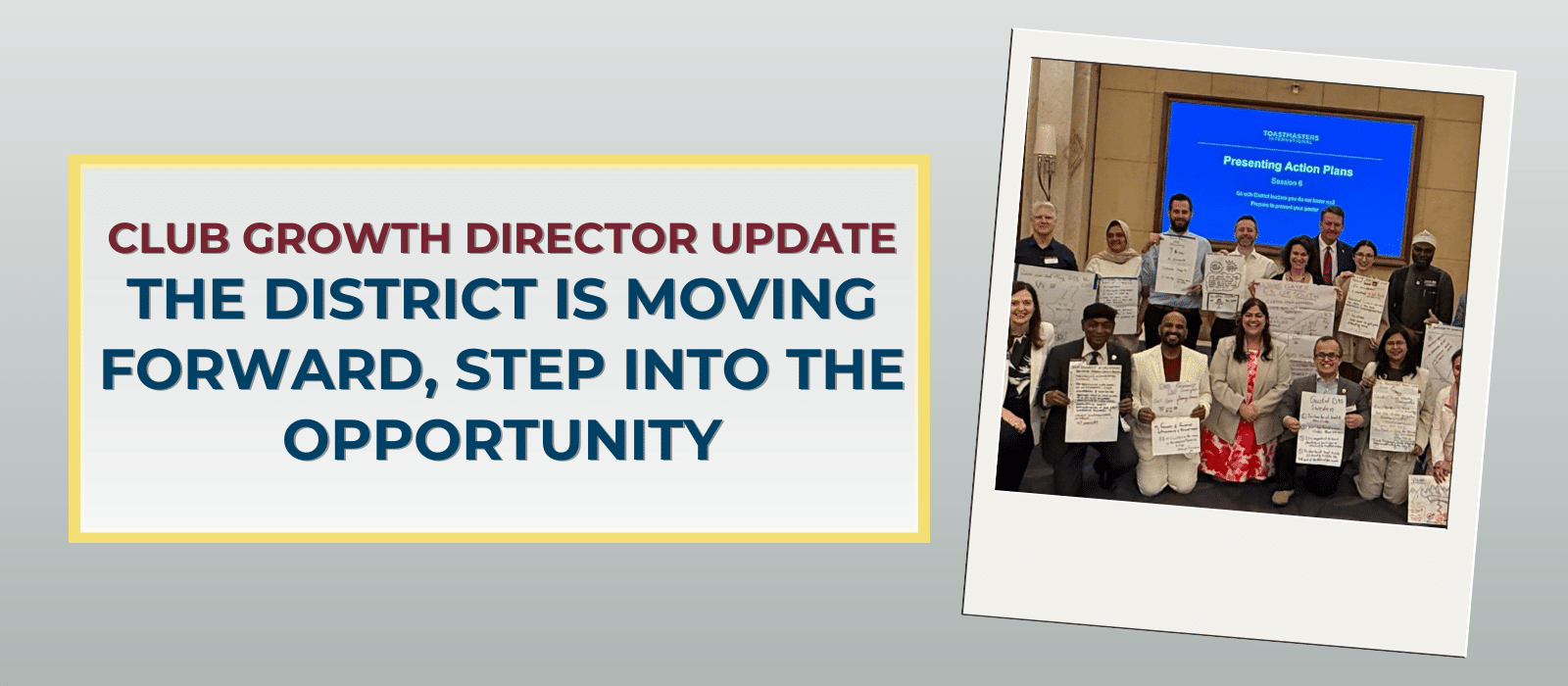
The days are finally getting longer. It is so nice to leave work when it is not pitch black. The rain may still be persistent but so are we and things are not all doom and gloom. We have several clubs celebrating charter anniversaries from 10 to 30 years. How fantastic. Well done to all the club officers and members over the years who have helped to keep these clubs going. See the chart further down in the article.
We have a winner for the tube selfie campaign. Congratulations goes to Beverley Daniel-Blugh from Legacy Speakers.
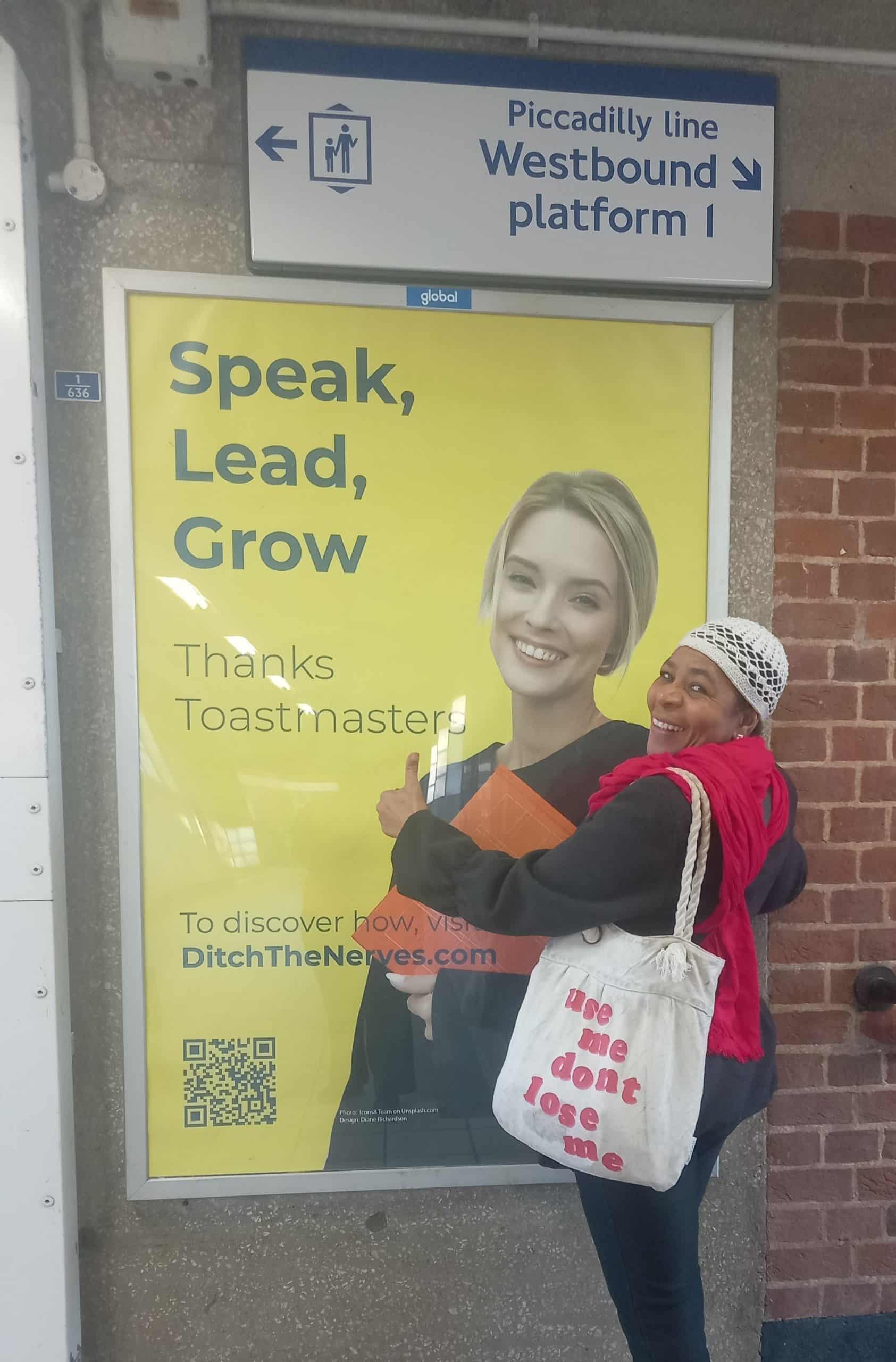
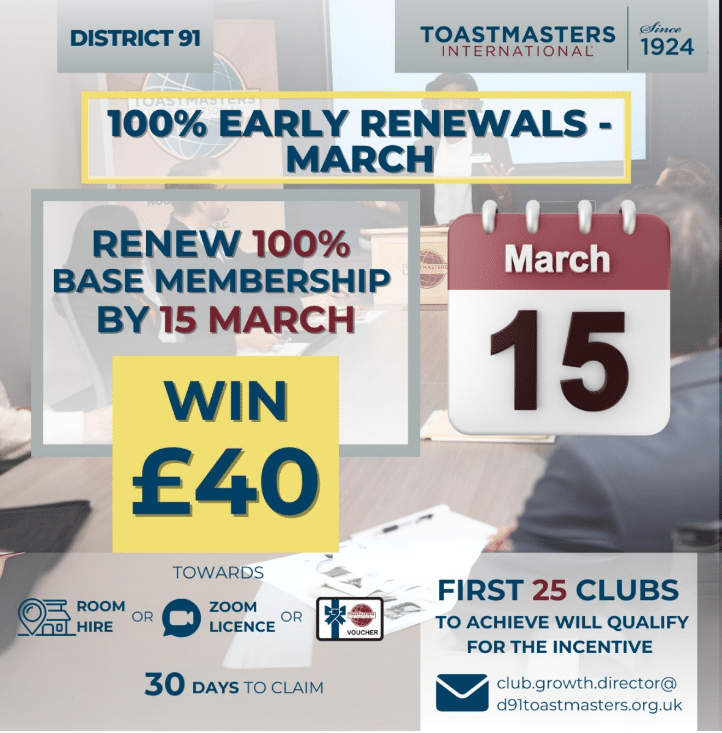
The D91 tube, bus and digital awareness campaigns are now at an end with the result that we are currently in the top three globally for new membership payments. There is still a way to go but it is a really positive start. Especially as we are coming up to renewal time. Yes, folks it’s that time again. Clubs have an incentive to renew the base membership number by 15 th March. I have shared why I renew further down in the newsletter. Help your club by renewing now. There is so much to gain.
We have added some new members, now it’s time to add even more. 1st February to 31st March is ‘Talk up Toastmasters’ time. There is an incentive for clubs when they add five new, dual or re-instated members between these dates. Invite your friends, family and colleagues along to your next meeting and help your club grow. There are so many benefits to joining from gaining self-confidence, building leadership skills, gaining a competitive advantage in the workplace and so much more. Remember why you joined and share your experiences.

Speakers of Croydon set out to increase membership through their annual Speechcraft in January. Hear from Sonia Botsarova and Laura Jones who led the programme for the first time. Well done guys. See the article further down in the newsletter.
We are not only increasing our membership payments, we have several clubs waiting in the wings getting ready to charter. Some will need demo meetings so do read the article below by Ramesh Halai, the District Corporate Demo Lead. If you can help at a demo they are a great experience.
All clubs need mentors when they charter so they can embed the processes and fully engage in the Toastmasters experience. If you want to support a new club for their first six months or need to complete your DTM then being a Mentor will benefit you, the new members and the new club as a whole. If interested then email District Mentor Lead casper.willcock@gmail.com
Why renew your Toastmasters Membership
A bully of a boss. Redundancy looming. Loss of confidence. I was at a low ebb. My friend took me to this thing called Toastmasters. ‘It will do you good’ she said. The members were engaged and engaging all willing to have ‘a go’, could I do that too? I went back. I did a table topic. I won. I’ve never looked back. Every year for almost 19 years I have learnt something new. I have gained knowledge, experience and skills all of which have led me the job I have now; a senior leader supporting people in the local community. Who knew that would be the result. I love my day job and I love Toastmasters who have offered me so many opportunities to learn, develop and grow and I now help others do the same which is so rewarding. That’s why I renew. What’s your story?
Drop-ins
In case you missed them
- Sunday 15th February – Guests to Members (From Discovery to Belonging) with Nadya Hamedi DTM. Below is the link to her article on how to use the New Prospective Membership System as you go on the journey to convert prospects to guests to members. https://share.google/w3UBhGHp0mtglSS9H
- Sunday 22nd February – All you need to know to start a club with Fern Kerr
See the trailer
Congratulations go to:
Club Anniversaries – January and February
Congratulations to all the clubs below who have celebrated a milestone Anniversary. Whether 10, 15 or more it is great achievement. Celebrate your success. It’s a fabulous way of bringing people together.
Based on the Official Charter Date
| Club | Month | Years |
| Abingdon Speakers | January 1996 | 30 |
| Epsom Speakers | January 1996 | 30 |
| Reading Speakers | January 1996 | 30 |
| Meridian Speakers | January 2006 | 20 |
| Farnham Speakers | January 2011 | 15 |
| Casterbridge Speakers | February 2011 | 15 |
| Data Science Speakers | January 2016 | 10 |
| Deutsche Bank Toastmasters | January 2016 | 10 |
D91 Member
Florian Bay DTM whose January D91 article on how to run an ‘Open House’was also published February’s Toastmasters International Magazine and Leader Letter.
https://www.toastmasters.org/magazine/magazine-issues/2026/february/full-house
Remember to order your Open House pack from club.growth.director@d91toastmasters.org.uk Please allow 4 weeks. Include name and address of contact person (not the meeting venue as packs tend to get lost).
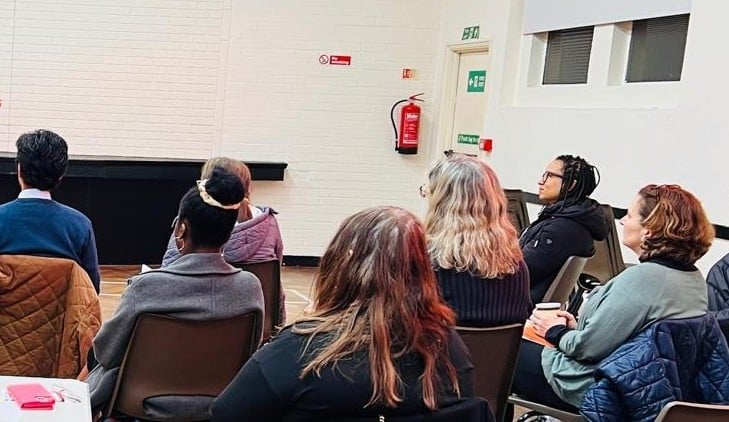
Here is a photo of an engaged audience at Woodford Green Speakers running their Successful Open House.
My Journey Delivering Toastmasters Demo Meetings by Ramesh Halai
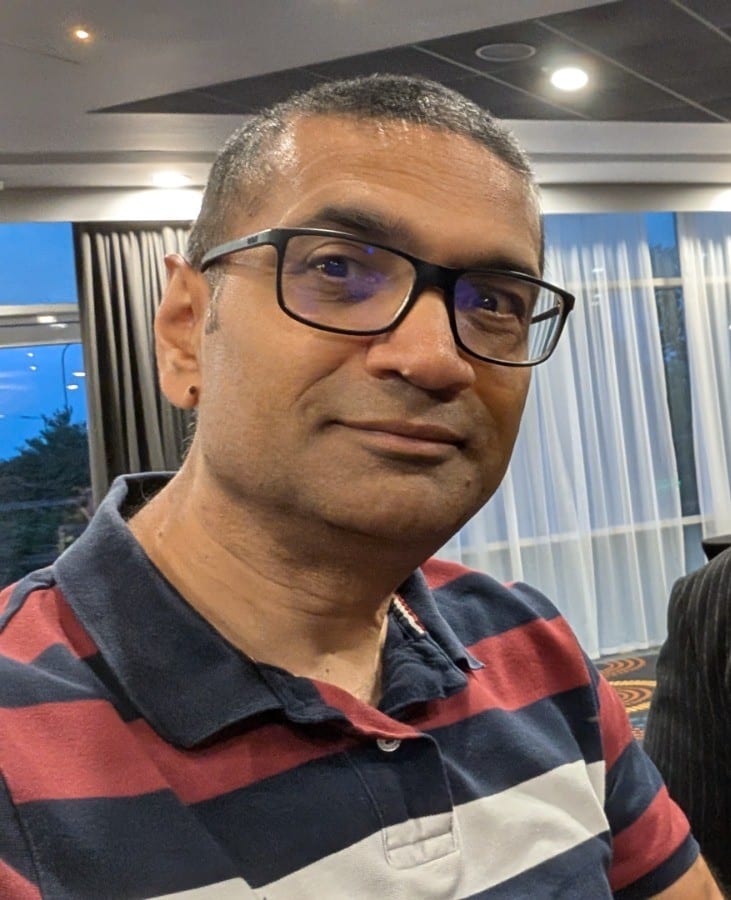
For more than a decade, Toastmasters has been a constant source of growth, challenge, and community in my life. Over the years, I’ve taken on many roles, but one of the most rewarding has been supporting the launch of new clubs through demo meetings. These sessions are often the very first glimpse people get of what Toastmasters is all about and being part of that first impression is something I deeply value.
This article is a look behind the scenes: what demo meetings are, why they matter, what I’ve learned from leading them and how you can help.
Who Am I?
My name is Ramesh Halai, you can call me Ram and I’ve been a proud Toastmaster for 11 years. Today, I work closely with Lynne, our Club Growth Director, as the Demo Lead for our district.
My role is simple in theory but incredibly meaningful in practice:
I organise and deliver demo meetings for new clubs whether they are being formed inside large organisations or emerging from local communities.
Every demo is an opportunity to show people the power of structured communication, supportive feedback, and personal development and every demo is a constant reminder why I joined Toastmasters in the first place.
What Exactly Is a Demo Meeting?
A demo meeting is a live showcase of what a Toastmasters meeting looks like. Instead of explaining Toastmasters with slides or brochures, we let people experience it.
A demo meeting:
- Introduces Toastmasters to prospective members
- Demonstrates the structure and flow of a typical meeting
- Gives guests a chance to see and sometimes try speaking roles
- Helps new and experienced Toastmasters stretch themselves by speaking in front of unfamiliar audiences
For many volunteers, demos are a chance to step outside their comfort zone. Speaking in front of strangers can feel daunting, but it’s also exhilarating and as we often say:
‘We learn best through moments of enjoyment’.
Corporate vs. Community Demos: What’s the Difference?
While the heart of a demo meeting remains the same, the purpose can shift depending on the audience.
Corporate Club Demos
Corporate demos usually come after a company has already done significant groundwork securing funding, gauging interest, and aligning with leadership. By the time we’re invited in, the organisation often already knows they want a club.
So, the focus becomes:
- Demonstrating what a high-quality meeting looks like
- Showcasing the communication and leadership skills employees can develop
- Helping the organisation visualise how Toastmasters fits into their culture
- Translating Toastmasters terminology into corporate language, making it easy for teams to understand how these skills translate into real workplace scenarios
We’re not recruiting we’re showing value.
Community Club Demos
Community club demos have a very different energy from corporate sessions. They’re more exploratory, more curious, and more personal. Many guests who walk through the door are hearing about Toastmasters for the first time. They’re not just evaluating a programme they are wondering whether they will be served toast with their tea or coffee. What they discover instead is something far more nourishing: a safe, supportive space where they can begin to find their voice.
People come to community demos for all kinds of reasons. Some are searching for:
- Greater confidence in everyday communication
- Personal development and a structured path for growth
- A supportive and encouraging environment where they can learn without judgement or fear
- A safe space to practise public speaking
In this setting, the demo becomes an invitation.
A gentle, welcoming message that says: “Come and see what’s possible for you.”
It’s a chance for guests to imagine themselves standing at the lectern, sharing their stories, and discovering strengths they didn’t know they had.
What Happens During a Demo Meeting?
A demo meeting mirrors a standard Toastmasters meeting, with a few adjustments to keep things welcoming and accessible.
A typical demo includes:
1. A Prepared Speech
Delivered by an experienced Toastmaster, this gives guests a clear example of what a project speech looks like.
2. An Evaluation
This is often the moment guests realise how unique Toastmasters is.
They see:
- Supportive feedback
- Constructive suggestions
- A focus on growth, not criticism
3. Table Topics
This is where the energy and focus shifts. Guests are encouraged but never pressured to participate. It’s fun, spontaneous, and often the highlight of the session.
One important difference:
We don’t evaluate guest speakers during demos, the goal is to inspire and not overwhelm.
How YOU can help – Where Do Role Takers Come From?
Demo meetings rely on the generosity and enthusiasm of volunteers. I am fortunate to work with an incredible network of Toastmasters across the district.
I usually reach out to:
- Division Directors
- Area Directors
- And friends, yes, I have a few!
They then contact their clubs to find members who are willing to take on roles.
These opportunities are more than just “helping out.”
They are:
- Unique growth experiences
- A chance to practise leadership and communication in a new environment
- A way to build strong relationships with Toastmasters from different backgrounds
- A reminder that we are part of a wonderful community that makes Toastmasters special
I try to share these opportunities widely because they truly are moments of development and connection.
Reflections After Two Years of Demo Meetings
For nearly two years, I’ve had the privilege of facilitating demo meetings and it has been one of the most fulfilling chapters of my Toastmasters journey.
Every demo is different.
Every audience brings new energy.
Every volunteer brings their own spark.
And every time, I’m reminded of the same truth:
Toastmasters changes lives one meeting at a time.
Being part of that first step for new clubs is something I’m genuinely grateful for.
Thank you for reading my article
Ram Halai, DTM, Club Growth Demo Lead
We did it – We ran a Speechcraft – Sonia and Laura share their experience
When the opportunity first came up, we’ll admit, we felt a little apprehensive. Speechcraft was something of a mystery to both of us. Laura had attended a session in 2025 as a guest, but Sonia hadn’t even seen Speechcraft before, let alone run it. For her, the learning curve wasn’t so much steep as vertical. All things considered, the idea intrigued us, and it felt like one of those “say yes now, figure it out later” leadership moments Toastmasters is famous for providing.
Laura said it best, “I had attended a few sessions in 2025 as a guest and had seen first-hand the supportive, confidence-building environment it created. That glimpse of its transformative impact was enough to convince me that it was something I wanted to be part of.”
We can both agree it was a steep learning curve.
We welcomed nine participants of a possible ten available slots, an uneven number that required some creativity, particularly around pairings and group activities. Once we jumped in, we quickly realised that Speechcraft isn’t just about public speaking: agendas, roles, updates, emails, guides, participants… and remembering who needed what information when.
At times it felt as though we were juggling flaming torches while riding a unicycle. Blindfolded. However, as with so much in Toastmasters, clear communication and the right tone carried us through.
Thankfully, we were never navigating moments of uncertainty and ambiguity alone. The unwavering support of an incredible club carried us forward and made all the difference. Being trusted by our club to lead Speechcraft was humbling, and watching participants grow in confidence, even within a single session, was the most rewarding part of all.
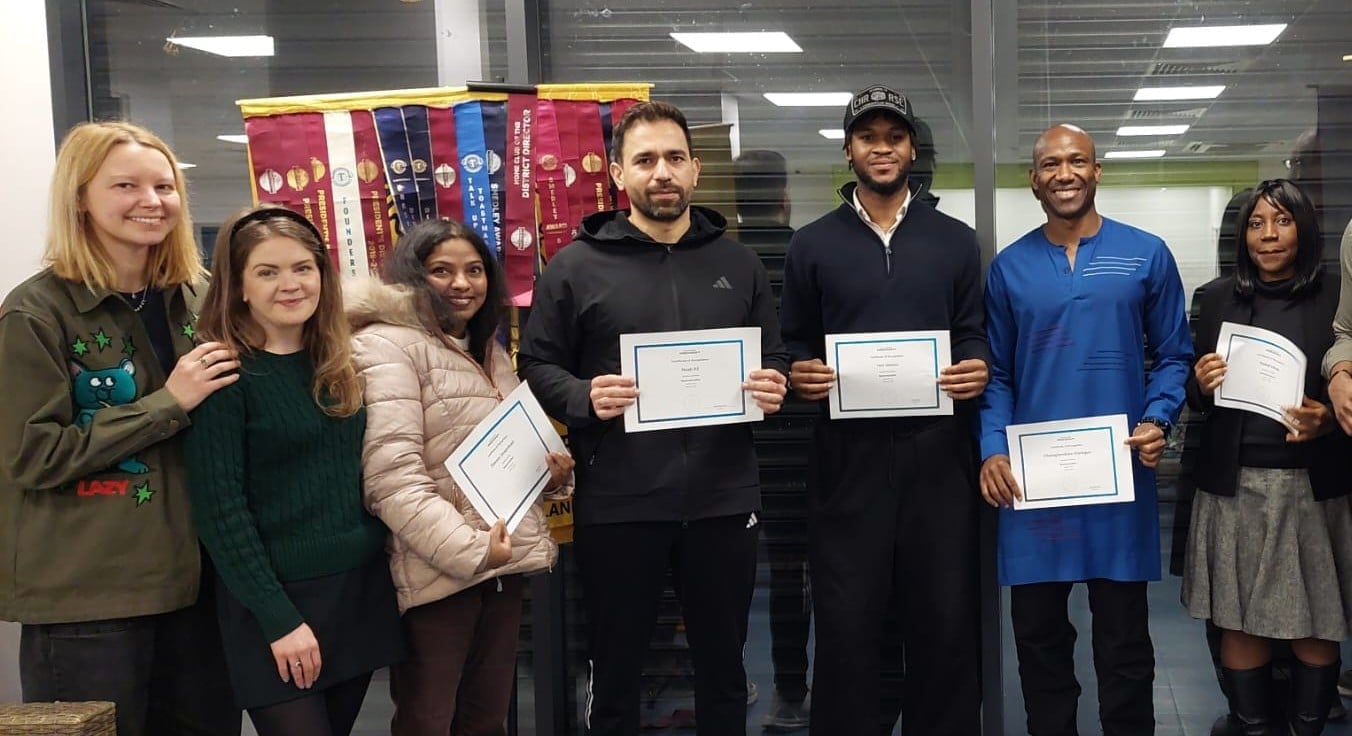
The journey reinforced an important lesson: while the best-laid plans often go awry, there is real skill in responding in the moment, in pivoting, staying flexible, and choosing progress over perfection. It’s a motto that echoed throughout our Speechcraft programme and one that will stay with us well beyond it.
To clubs considering Speechcraft: take the leap. To members contemplating the coordinator role: the rewards far outweigh the challenges. While moments of uncertainty are inevitable, the experience builds skills well beyond public speaking, strengthening project management, communication, and leadership capabilities, while increasing your visibility within the Toastmasters community. Most importantly, you will form valuable connections with mentors and peers. Leadership rarely arrives by invitation; it requires stepping forward and trusting the support around you. When participants deliver their final speeches with confidence, you will know the experience was truly worthwhile.
To participants who are considering signing up for Speechcraft, do it! You won’t regret it. You’ll get to practise in front of a friendly, supportive audience, receive feedback on your speech structure and delivery, and meet some truly lovely people along the way.
- Sonia Botsarova & Laura Jones
- SpeechCraft Co-ordinators 2026
- The Speakers of Croydon
Monthly Top Tips by Nadya Hamedi
During her drop in session in converting Guests to Members Nadya provided a few insightful tips:
Use the New Prospective Membership System (in club central) as it will save committee members time
Be a ‘tourist’ in your own club and look at it through the eyes of a guest
- Are they greeted warmly with a smile
- Are they given a name badge
- Are they introduced to people or left on their own
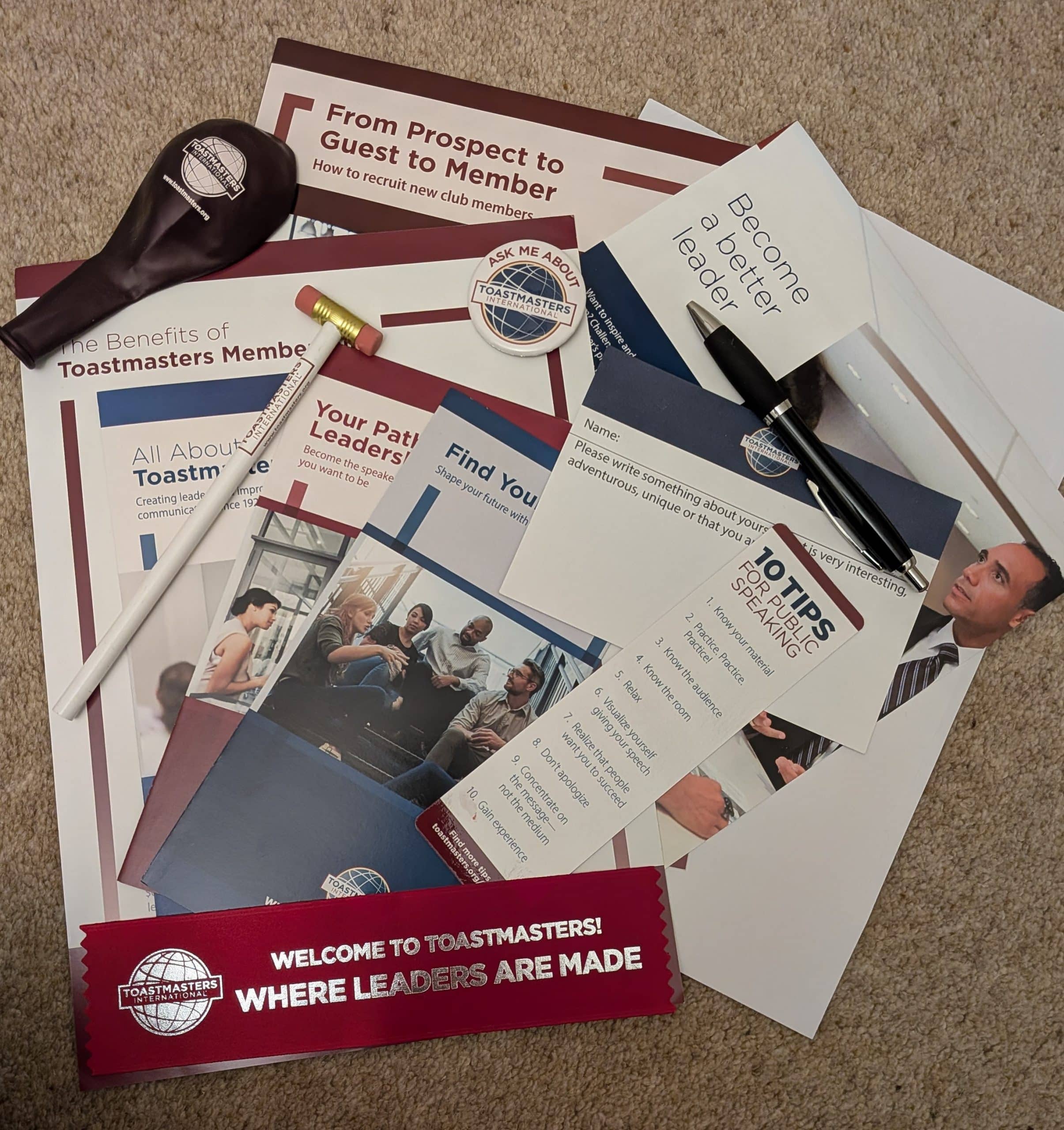
- Are they given a welcome pack
- Are they presented with a take-away e.g. a ribbon such as ‘Where leaders are made’
- Are they always followed up and invited to join
Last Updated on 24th February 2026 by Lynne Cantor Gayer