West London Speakers: 20 Glorious Years of Friendship, Fun & Education

Monday 7th September 2026 was an incredibly special evening for West London Speakers. We were celebrating our 20th birthday in a beautiful meeting room in Hammersmith, London.

Twenty glorious years of public speaking; twenty glorious years of warmth and friendship; twenty glorious years of learning and being educated in what I believe is an absolutely fantastic art form.

I was one of the co-founders of the Club in 2006, so this was always going to be a very special and emotional occasion for me; West London Speakers is my home club. I have been part of it from the very beginning, and to see the Club celebrate its 20th anniversary was a moment of immense pride for me.

I must admit that I was also mildly bemused by the word birthday. Not so long ago, I would have called it an anniversary. But perhaps birthday is the better word. After all, reaching 20 is something to celebrate!

And perhaps the club’s greatest achievement is not simply reaching 20 years but reaching 20 years successfully. My AI research suggests that the average lifespan of a Toastmasters club is around 9.3 years, so surviving and thriving for two decades is quite an achievement.

A room full of people
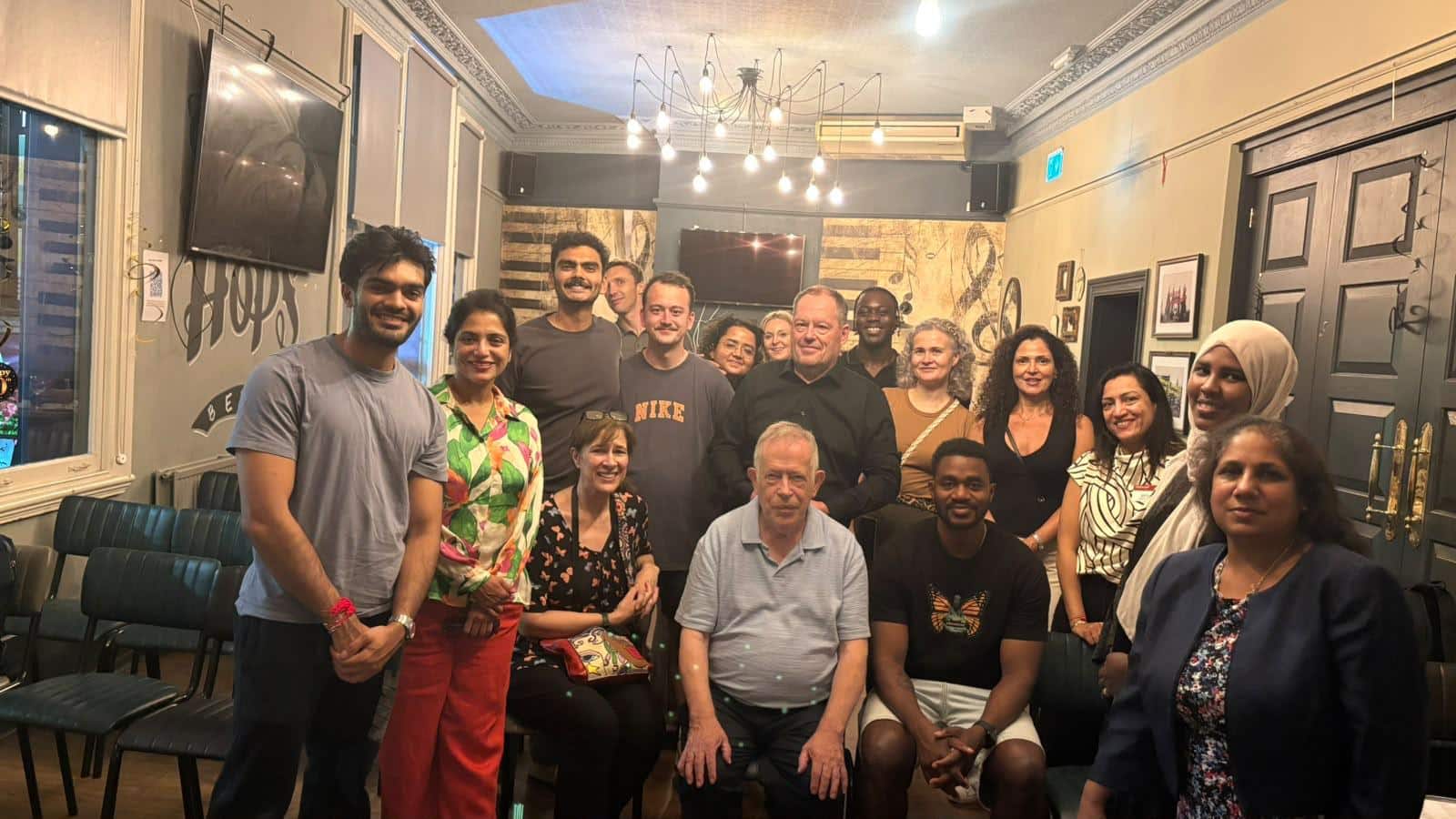
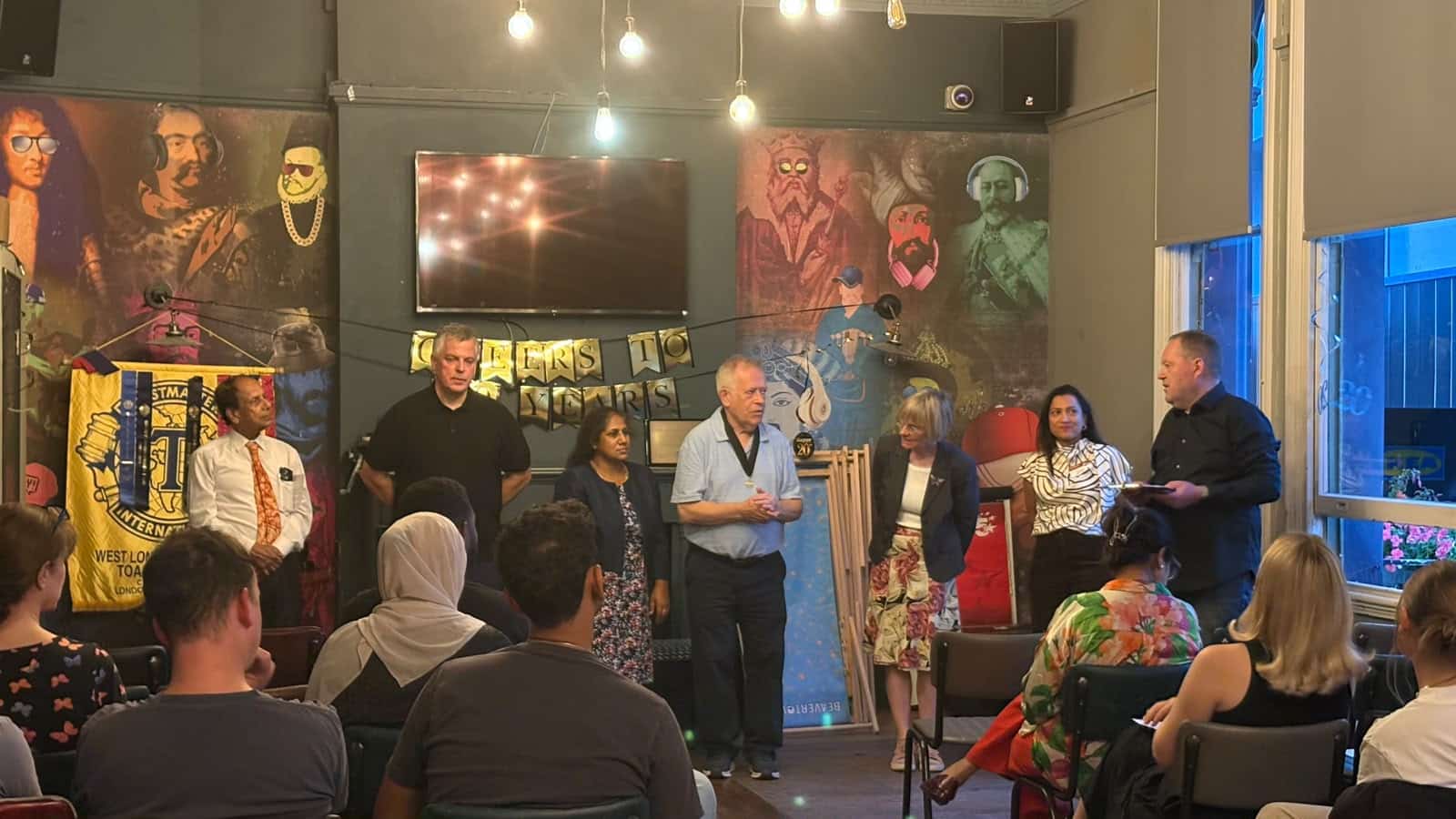
The room certainly looked the part. There were decorations, a lovely birthday banner and, of course, our club banner, proudly displaying its collection of ribbons and awards.

Around 30 people joined us for the celebration, including three founder members, a former President, another exceptionally talented former member, a few guests, the Division Governor and, of course, our current members. It was a wonderful gathering that brought together people from various stages of the club’s 20-year journey.

For me, there is a quite simple test of whether a club is healthy and thriving: people come into a room and at once start looking for somewhere to sit. That happened on our birthday evening, which was a particularly good sign!

The stage was set for a wonderful evening.

As is traditional at Toastmasters celebrations, we had a small number of speeches — four, in fact — followed by a 2026-themed Table Topics session. Then came the important business of food, drink and plenty of opportunity to catch up with one another.

How it all began

The first speech came from one of our founder members, who took us back to the formation and early years of West London Speakers.

The official explanation for the club being formed was essentially that there were not enough speech slots in another club. I would probably describe it rather differently in that there were a number of disaffected people from the previous club!

Whatever the reason, the result was the same.

Our first pre-charter meeting took place on 24 April 2006. By the middle of August, we had reached the required 20 members, and on 1 September 2006 West London Speakers was officially chartered.

If memory serves correctly, we broke world records at the time by becoming the first club to charter in such a short period.

These were quite unconventional times. There were no online resources as we know them today, no WhatsApp and no social media. In fact, these were the BC days — Before Cellphones and Before Contact Lists.

Communication meant email and, quite literally, picking up the telephone and speaking to people.

I remember my own experience as VPE in those early days. On a Saturday morning, I would phone people and desperately plead with them to fill the next three speaking slots. It was a very personalised and targeted approach.

Often, people would say, “No one ever phones me!” — and before long, we would find ourselves launching into a half-hour conversation. The reader will be relieved to hear that this tactic worked.

We realised very early on that simply running meetings was not enough. If people were going to keep coming back, we needed to create a real sense of community and belonging. We had to give people reasons to stay — and, ideally, reasons to look forward to the next meeting.

So, we organised memorable parties with copious amounts of delicious freshly cooked food, Indian classical dancing and even a firework display; extravagant Christmas parties; and an extremely animated debating evening, which we called the Socrates Cup. It all helped.

Keeping the club going

The second speech was given by our current President, who joined the club in 2018— a particularly important moment in Toastmasters history.

That was the year the education programme we use today was launched. It was also just a little before the Covid era changed the way clubs everywhere operated.

We are hugely grateful to this President for keeping West London Speakers going during Covid. He gave generously of his time, hosting online meetings for a lengthy period. He made sure the club continued to meet and remained connected. At a time when meeting in person was impossible, his commitment was invaluable. We are truly indebted to him for helping the club through such a difficult period. Remarkably, our membership numbers did not diminish or suffer during that difficult period.

Twenty years of learning to speak
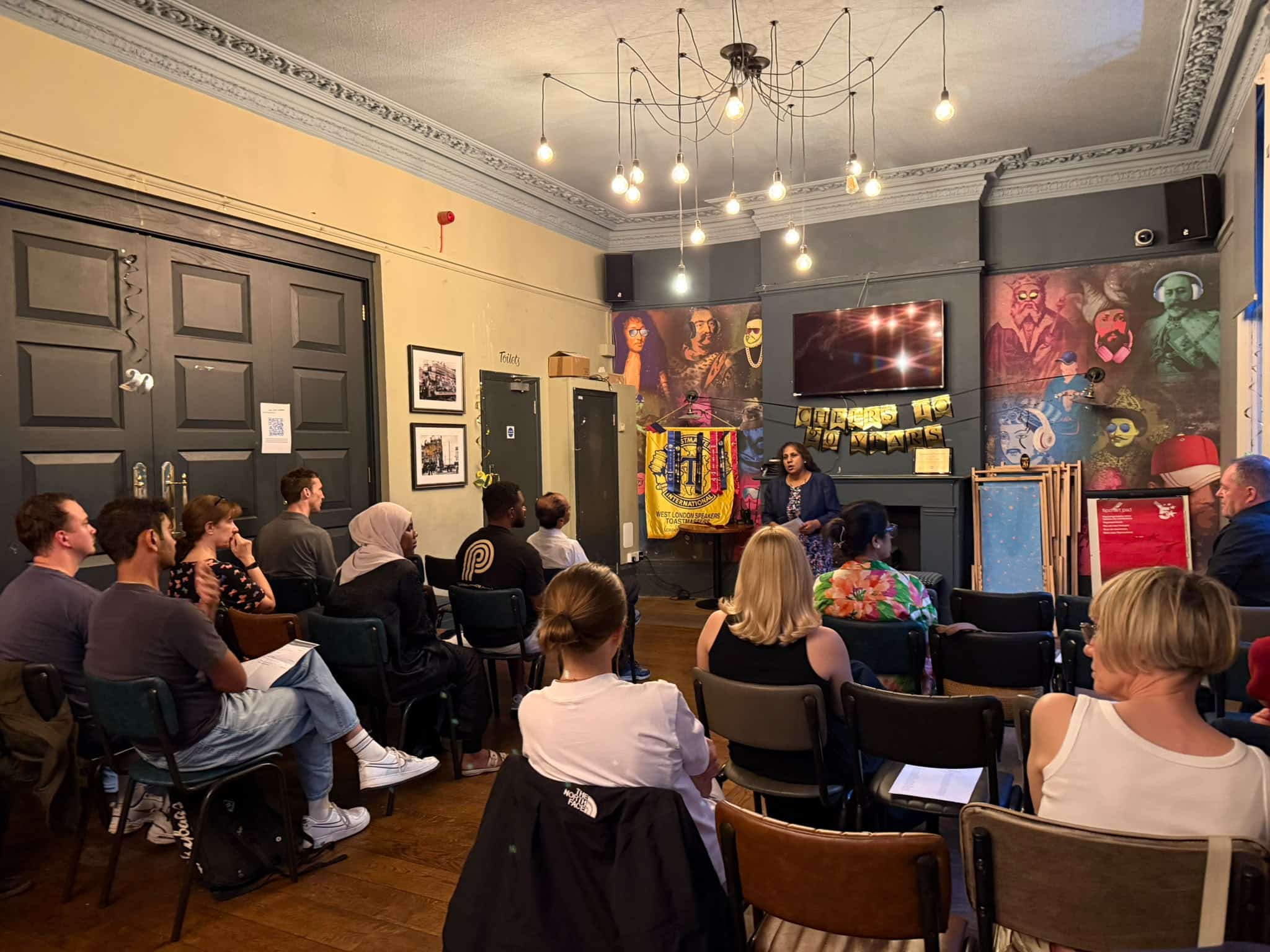
The third speech was given by another founder member — me!

My contribution was really a reflection on what those 20 years represent. Twenty years of speeches, stories, laughter, nerves, triumphs and learning — but, above all, twenty years of people finding the courage to stand up and speak.

But I wanted to look further than those 20 years.

The ancient Greeks, centuries in times BC, understood the extraordinary power of speech. Public speaking could influence democracy, win legal arguments, inspire minds and challenge set up thinking.  Figures like Socrates, one of the founding fathers of Western philosophy, epitomised this power, using relentless public questioning in the heart of Athens to challenge traditional beliefs and provoke deep self-examination among his fellow citizens. Public speaking was also recognised as a highly esteemed art form, on a par with music, drama and dance. 

At roughly the same time, in ancient India, the remarkable debater Gargi was fearlessly challenging some of the greatest sages of her day.

Across these ancient civilisations, schools of oratory and debate developed. More than 2,000 years ago, public speaking was already regarded as a serious and highly valued skill.

And yet, later, the schools of oratory and debate largely disappeared for many centuries.

It was revived in a major way in 1920s’ America through two very different pioneers: Dale Carnegie, who developed a commercial business around communication and Ralph Smedley, who created the not-for-profit organisation we know as Toastmasters.

In 1924, Smedley held the first Toastmasters meeting in the basement of a YMCA. His philosophy was beautifully simple:

“We learn to speak by speaking.”

For the first 15 years there was no formal Toastmasters curriculum. Smedley encouraged members to choose subjects that genuinely interested them — an early recognition of the importance of personal choice and autonomy.

Then came the first structured programme in 1942: the Basic Training Manual, containing 12 progressive speech assignments. Members learned how to introduce themselves, organise and structure a speech, use vocal variety and even read from a manuscript.

The timing was significant. The Second World War created an enormous need for communication that was direct, concise and authoritative.

By 1969, another major transformation had taken place. Toastmasters explicitly connected public speaking with leadership and professional management through its Communication and Leadership Program.

The influence of the corporate world was becoming increasingly apparent. Effective leaders needed to communicate effectively.

Members worked through ten assignments towards the Competent Communicator award.

By the early 2000s, Toastmasters had separate communication and leadership tracks, alongside specialist manuals covering areas such as storytelling and humour.

Then, in 2018, came another major transformation: Pathways replaced the traditional ten-speech structure with a much more flexible and career-focused approach, designed to connect communication and leadership skills with real-world professional and personal life.

So public speaking education has never really stood still. It has continually changed to meet the needs of each generation.

There is also a slightly amusing way of looking at that history: follow the money.

Carnegie demonstrated the commercial value of communication. The Second World War created a demand for concise and authoritative speaking. Corporate America highlighted the importance of communication for leadership. And today we have a much more career-focused approach.

Yet beneath all those changes, the fundamental principle has remained exactly the same:

We learn to speak by speaking.

And that is ultimately what our 20th birthday was celebrating — not simply the history of a club, but all the people who have walked through our doors, stood behind the lectern, encouraged one another, and gradually found their voices.

We can be proud of our past, excited about our future and confident that there are many more speeches, stories, friendships and memorable moments still to come.

It does make you wonder: what will Toastmasters look like in another ten, twenty, a hundred years’ time?

Whatever changes, I hope the spirit of learning, courage, friendship and fun remains.

And, as Shakespeare reminds us:

“Above All, To Thine Own Self Be True.”

Here’s to the next 20 years of West London Speakers!

A successful recruit
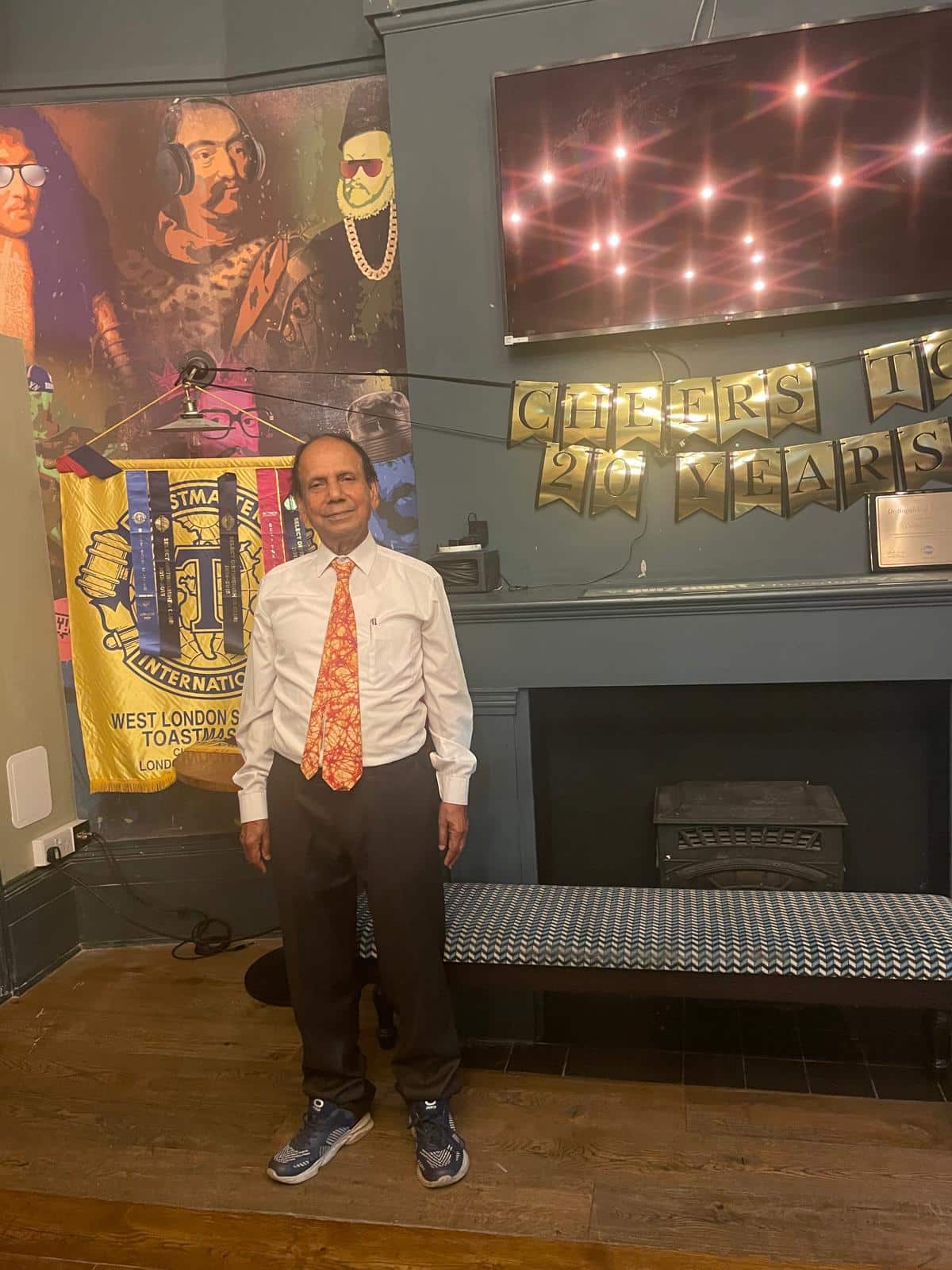
The fourth speech came from another founder member — my dad.

He joined after a little persuasion from me, and he modestly described himself as one of the club’s “more successful recruits!”

His reflection was a rather more serious one. Joining Toastmasters gave him the opportunity to return to Shakespeare, particularly to that famous speech in Hamlet about how we should speak — the speech that begins, “Speak the speech, I pray you…”, and which is still recited daily by Shakespearean actors today. Shakespeare, of course, is regarded as one of the greatest speechwriters not only of the English language but also of all time.

What began as a gentle piece of family persuasion became, for him, a lasting commitment and a source of great joy.

Over time, he also became increasingly conscious of the way great speeches can shape and preserve history — from Plato, Marcus Cicero, Julius Caesar and Seneca the Younger to Churchill, Gandhi, Nelson Mandela and many others.

His fatherly, kindly message to the younger members was simple: read and study some of these great speeches from time to time. Listen to how they are delivered.

In doing so, perhaps you gain what he called a “cosmic view of the spoken language” — and, beyond that, a cosmic view of the world.

A 2006 styled Table Topics

After the speeches came a very appropriate 2006-styled Table Topics session, with all the questions and answers being excellent.

A couple of contributions particularly stayed with me.

One guest, a former President, was asked what she had learned from Toastmasters. Her answer was about taking what she had learned in Toastmasters and using it in the wider world.

She has certainly done that.

Having learnt to become a formidable speaker, this former President has set up an autism café where people meet once a month to read, draw, paint and talk to one another. This cafe has now been running successfully for a number of years.

There was another lovely coincidence. The autism café was using the very same venue immediately after us on the very same day, where I had recently organised Club Officer Training (COT).

And I had no idea who the leader of that group was.

It really is a small world.

That, for me, is another of the great things about Toastmasters. What we learn in the club does not have to remain within the club. It can be taken outside and used to do something positive and selfless for other people.  That is an added bonus.

And finally… the food!
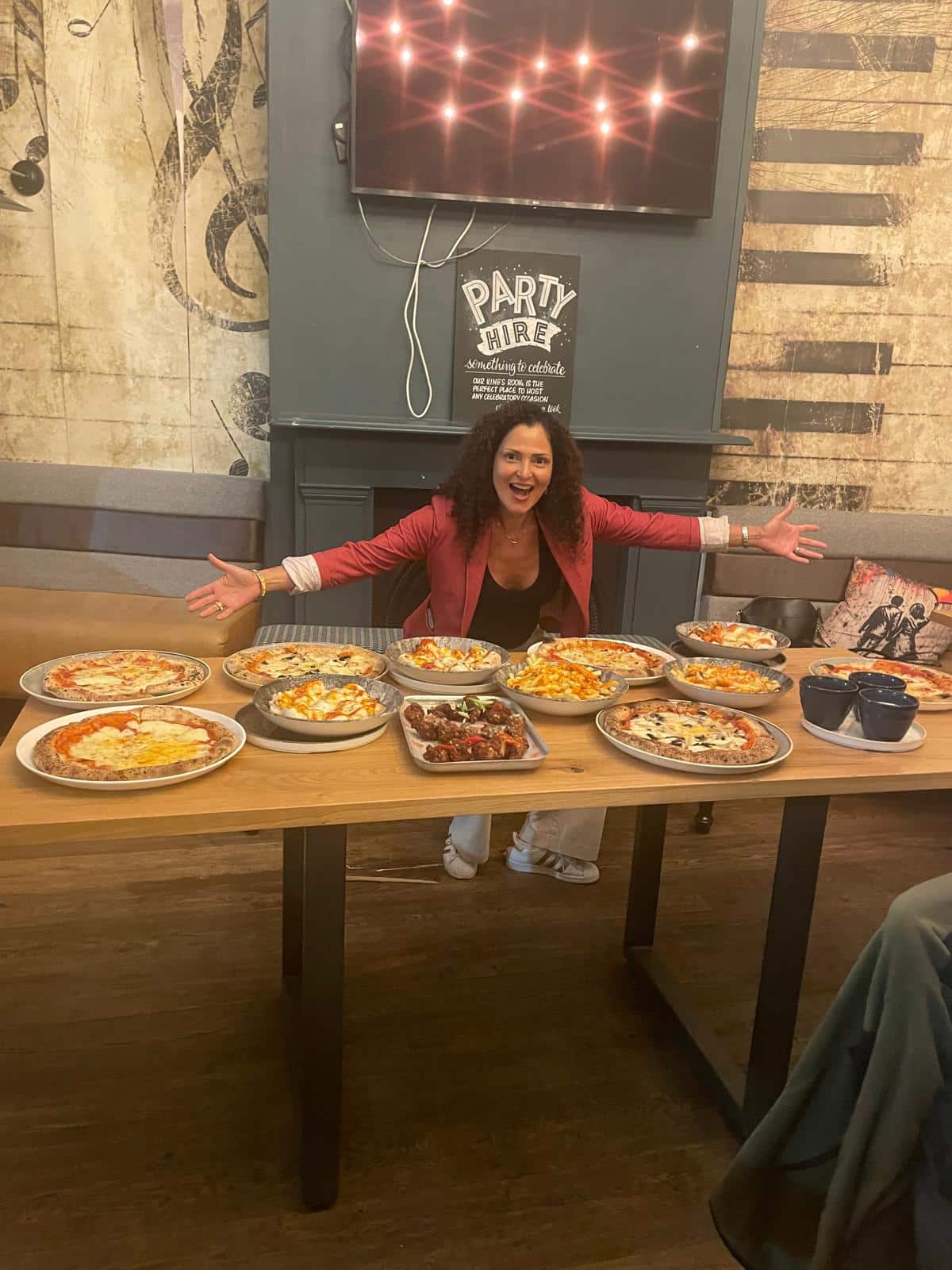
No birthday celebration would have been complete without food, and West London Speakers has always been a great believer in generous, warm and inviting hospitality.

We had hot, delicious food: pizzas, cheese and tomato dough balls, chips and chocolates, all generously provided by the club.

If anyone would like to know more about us, then please visit:

West London Speakers website

West London Speakers on LinkedIn

And finally, from someone who has been part of the journey from the beginning:

Here’s to the next 100 years of West London Speakers and Toastmasters!
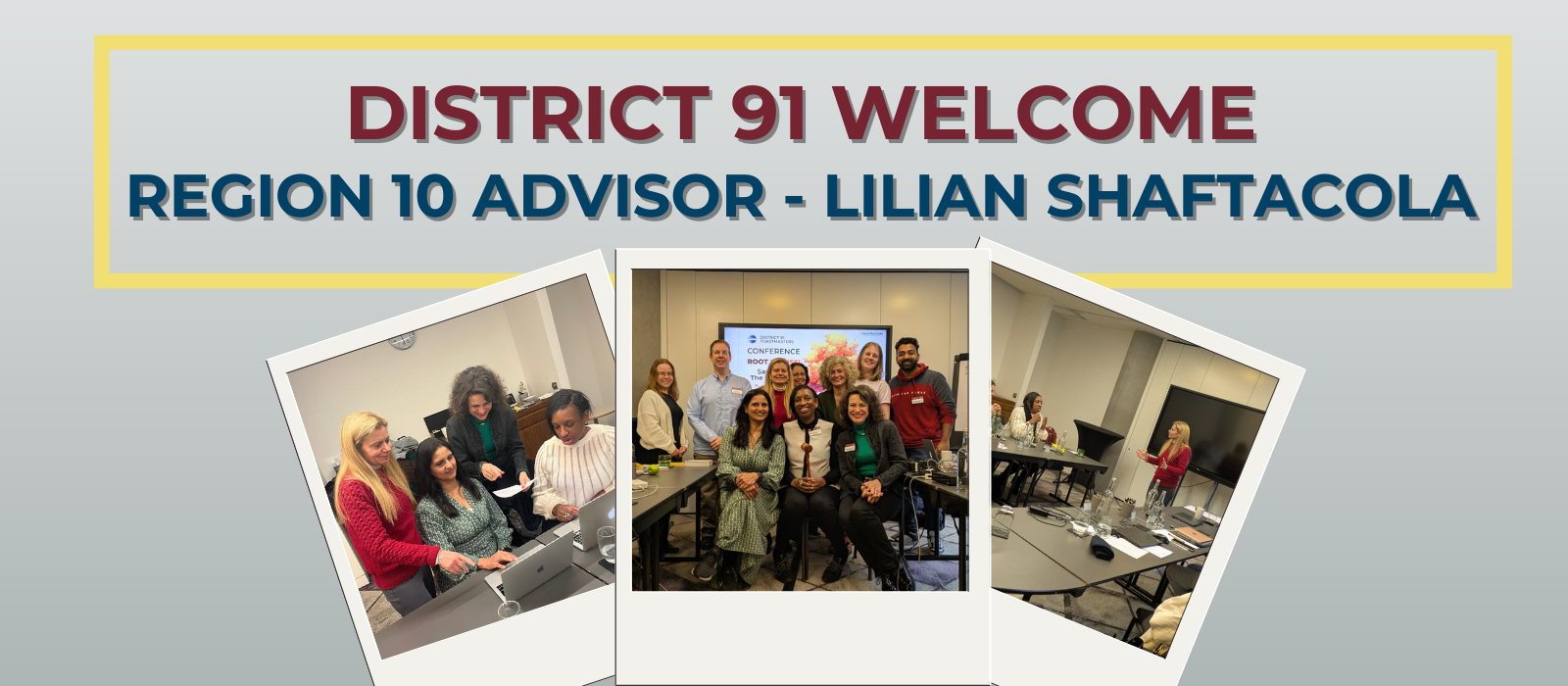
 

District 91 Welcomes Region 10 Advisor – Lilian Shaftacola

We were excited to welcome our Region Advisor, Lilian Shaftacola DTM to District 91 this November! Her visit was filled with great conversations, shared insights, and plenty of encouragement for our members and leaders.
She joined our District Executive Committee (DEC) meeting as an observer, giving her a chance to learn more about our goals and the work our leaders are doing this year.
 
She also cheered on contestants at our November District contests, adding to the energy and excitement of both events.
One of the highlights of her visit was spending time with several of our clubs. She connected with members, shared helpful perspectives, and enjoyed seeing the unique spirit each club brings to the Toastmasters experience.
 

We’re grateful for her visit and the positivity she shared throughout her time with us. Her support helps keep our district motivated and moving forward!

Finding Freedom Behind Bars: How Public Speaking is Changing Lives at HMP Grendon

The main building, completed in 1962, at HMP Grendon. Photograph: Ben Gurr/The Times

A couple of years ago my club, Bicester Speakers, was lucky enough to be invited by Beckenham Communicators to take part in a workshop at HMP Springhill. Springhill is a male, open prison and we spent a day there doing various activities culminating in the residents writing a speech on a topic of their choice. It was a fantastic experience; really rewarding and I felt quite privileged to be there and see some of these men beat their fears and stand up and speak. When the prison asked us to organise another session, I jumped at the chance to take the lead. 

It was another 18 months before I met with one of the prison officers to make some plans. I turned up at the gate of HMP Springhill for the meeting but they didn’t have any record of me on the visitors list at the gate. “Are you sure you’re at the right prison? “ I was asked. It turned out that I wasn’t and I should have been at the second prison on the site, HMP Grendon. Grendon is a therapeutic, category B, male prison. It’s very different to Springhill. At Springhill the men are able to freely walk around the grounds whilst Grendon is very much the high fences, gates and bars that we tend to associate with prisons. Now at the right prison, I was shown around and introduced to some of the men. I was made to feel extremely welcome by everyone. We made plans for something slightly different; rather than just a single workshop we were going to set up a group that would meet weekly for 60 to 90 minutes. 

It took a few more months to get through the MOJ vetting process but finally in August 2024, the Gaveliers met for an introductory meeting. I vividly remember walking into that first meeting. I didn’t know what to expect or how many men were going to be there. I walked into 13 expectant men wondering what they had let themselves in for. I base the sessions around Toastmasters with the primary aim being to give the men confidence; to help them speak out in the various group sessions they do, to express themselves without resorting to swearing, to speak coherently and concisely in parole hearings or anything along those lines. 

We started by doing classic ice breaker style exercises to build rapport in the group. Since those early meetings we’ve had prepared speeches including a wedding speech, we’ve run debates and table topics as well as running through specific things that have come up in their week.  

Over the last six months or so we’ve built a group where everybody feels safe; it’s a safe space to try things, to give them a go no matter how worried they are about them, to share concerns, to be vulnerable, to fail and try again, where everyone is wanting you to do well and nobody is judging and to know none of it is going to leave the room. The men are more than happy (after a little grumbling) to embrace anything that I throw at them. They are especially good at giving and receiving feedback.  

I get a huge amount out of the Gaveliers. I was scared when I turned up to that first session. I had no idea what I was walking into nor what to expect. It’s given me confidence to deal with different situations; to facilitate an unknown group of people and to take people as you find them with no preconceptions. I get such a sense of achievement from seeing the massive improvements the men have made, the enthusiasm they bring to all the sessions and their desire to improve. They are incredibly protective of the gavel club and I am so proud of them and their achievements. 

I’d recommend this type of opportunity to everyone. It doesn’t have to be a prison, it could be any group or organisation. It doesn’t have to be on a long term basis like I’ve set up at Grendon, it could just be a small number of sessions. As Toastmasters, we’ve all got quite a unique set of skills which can be both valuable to share and rewarding. 

HMP Grendon is a category B training prison which accommodates around 200 men with varying sentences in a therapeutic community. Prisoners take part in regular group meetings and activities designed to help them develop positive relationships, take an active role within their wing, reduce their risk of re-offending and improve their psychological wellbeing. 


Note: The  author prefers to remain anonymous.

Keep on running!

Thanks to the hard work and efforts of members, Club Officers, and DEC members as a District we are close to becoming a distinguished district. Why is this important and what does it have to do with me you might ask? Running a Distinguished club clearly demonstrates to the rest of the Toastmasters Community that we have quality clubs who are meeting members needs and so it is with districts. For this reason, I am going to ask you to “keep on running”!

Keep on running!

Many sports coaches and athletes talk about running or competing beyond the finish line. If they are running 100 meters, they will talk about running 101 meters. This is because they want to finish a race as strongly as possible not only for an advantageous position this race, but also to set them up for good start for next race.

They want to ensure they achieve the best result they can and not be overtaken in the last few years. So, it is with District 91, we are in touching distance of becoming a Distinguished district for the first time since 2020. Some of you may ask why does this matter? It matters because becoming a Distinguished District shows the rest of the Toastmasters world how hard you, as DEC, Club leaders and members have worked to have a successful year yar.

As I mentioned during the Hall of Fame, we have over 1,100 pathways level awards this year and many more to follow in the last six weeks of the year. Where we most need your help is with clubs seven or fewer members to return them to good standing and help to convert some pre charter clubs into chartered clubs. If you can help, please contact either Mo our Club Growth Director or myself.

Hall of Fame

Many congratulations to this year’s Hall of Fame recipients. It was a great to see Debbie Williams and Amy Jones both acknowledged for achieving their DTMs, with Amy receiving her medallion on Saturday. Winchmore Hill Speakers won PR Club of the Year for their great website and social media activity which helped them launch a Gavel Club during the past year.

Diane Richardson, District Director 2023/24 with Gala Dinner and Hall of Fame MCs Serena Salvatore and PDG Hilary Briggs, DTM

Our Youth Leadership Co-ordinator (and District Admin Manager) presented the Youth Leadership Facilitator award to Gillian Myers of Hamwic Speakers. The first Phoenix Award of the Year for clubs who start the year with less than 12 members and then have 20 or more by the end of the year, went to FTI Consulting who started the year with only three members and now have 25.

Club Sponsor of the Year was Kavita Dukai for her work chartering Sustainable Speakers and Olga Galaiko won Club Mentor of the Year for her work supporting L&C Toastmasters Club and sponsoring a second London Stock exchange club.

City of London Toastmasters won the Club Growth Award for recruiting thirty-seven new members and growing the club to seventy-three members. Celia Edwards won Club Coach of the Year for her work with Battle Speakers who thanks to her hard work and that of the club committee in growing the club to its largest size since 2019/20.

The Corporate Club of the Year is Moody’s Europe Toastmasters, they were the first corporate club this year to become Presidents Distinguished with a perfect 10 DCP points after being a select distinguished Club last year and distinguished in 2021/22.

Hamwic Speakers, are this year’s Club of the Year. This club has a long record of having over 40 members and of becoming a conformed Presidents’ Distinguished club in early April for the past several years. To meet demand the club, hold weekly meeting to ensure that there are sufficient speaking slots available for members to progress through Pathways.

Helyn Ashford (J10) is this year’s Area Director of the Year. Last year Helyn stepped up and became an Area Director midway through the year. This year she is helping to Charter a new online club in her area, has helped all five of her clubs be the best they can be with two already distinguished and two more very close to becoming distinguished and her enthusiasm has helped raise the energy level in any room which she enters.

The Division Director of the Year is Division H Director, Guler Cortis, for her work in starting a new club at her workplace and the support she has given to clubs and Area Directors in her Division this year.

The Toastmaster of the Year is Juli Chapman, for her work as a Pathways Champion and Club Coach. The District Directors award went for the second time to Janet Alkema. Janet first helped me when she was Division D Director in 20/21. She went on to became Youth Leadership Co-ordinator the following year and continues to hold this role. In 2022/23 she stepped in to become Division D Director mid-year and this year she stepped in as Administration Manager when her predecessor stepped away in October.

Conference Team

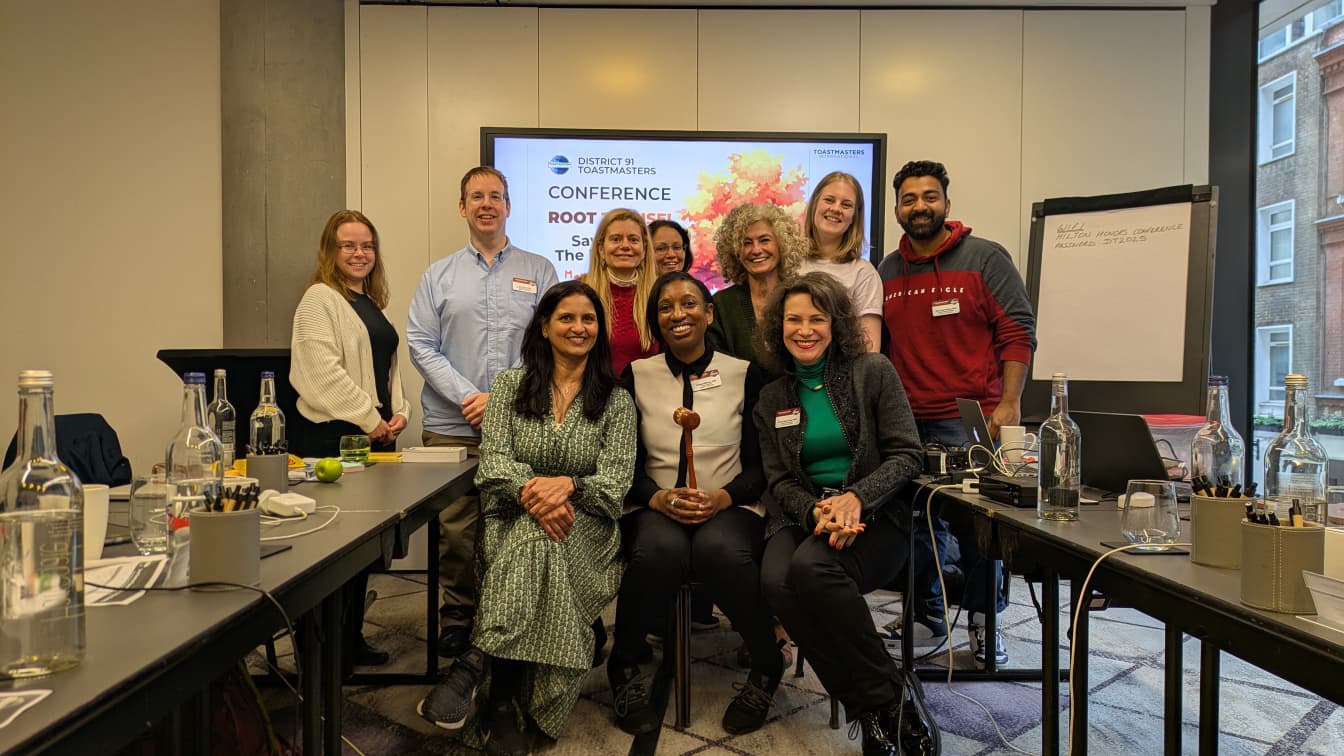
This month’s newsletter has been put together by the conference team. If you did not attend, you missed a magnificent event as I am sure you will read and see below. Many thanks to Amy Jones, DTM and her team who put on a fantastic conference in Bristol.

If you want to develop your event management skills then Steve is looking for next year’s conference director, please contact him.

Saving Kings

Embarking on my Toastmasters journey has been nothing short of a riveting adventure, a saga filled with challenges, growth, and triumphs that have shaped my narrative in unexpected ways.

Picture this: my first encounter with Toastmasters at university, navigating the intricacies of public speaking while wrestling with my own stammer. The journey began in the Holborn Speakers Club, where even uttering my name proved to be a Herculean task. But amidst the initial struggles, the supportive camaraderie of fellow club members fuelled my determination.

As fate would have it, the path led me to the Kings Speakers Toastmasters—a haven tailored for those, like me, grappling with stammers and social anxiety. I flourished in embracing this unique community, earning competent communication and leadership accolades. The club burgeoned to almost 50 members, necessitating a quest for a new meeting space and launching a dazzling website.

Yet, life’s twists took me to Cambridge, where attempts to replicate the Kings Speakers magic fell short. Three transformative years unfolded, enriched by the McGuire Programme’s wisdom, but a return to London brought unforeseen challenges. Mainstream Toastmasters struggled to comprehend techniques crucial to individuals like me, leading to psychological setbacks.

In the face of adversity, the prospect of rejuvenating the Kings Speakers club emerged. Undeterred by tales of closure, I seized the reins and assumed the mantle of its president. The vision? To rebrand as the Stammer and Social Anxiety (SASA) Toastmasters Club—a beacon for those seeking understanding and community. London’s pervasive loneliness spurred a mission: to forge connections, transforming strangers into Shrek or Ice Age-like families.

Join me on this exhilarating quest as SASA Toastmasters Club ascends to greatness. Let us redefine the Toastmasters experience, fostering a supportive environment where triumph over speech impediments is not just a personal victory but a shared celebration. Together, we shall conquer the challenges, rewriting the narrative of stammerers and those battling social anxiety in the vibrant tapestry of London life.

Vibesan Illampooranan
Kings Speakers