Preparing for the small screen

By Helena Boden-Brewer

Fellow Toastmasters this is our new reality. As we adjust to this massive change to our world, for the majority that is staying at home, pause to consider those that are working to support us, from the wider community. For some, this may be family and friends that work in the health service, the supermarkets and the delivery drivers. Follow the advice as we receive it. The changes are daily, and we all have to readjust again.

For our Toastmasters community, the switch to holding online club meetings, hosting events and contests, the response has been phenomenal. In such a short space of time, Zoom meetings are being held and the sense of our community is shining through. The club buddies of phoning members of within your club and checking in with members. It’s a small thing, that really matters. For those that are self-isolating or live alone, being able to join in, either online or via the dial-in details, hearing familiar voices, sharing stories, are providing support in these challenging times.

A new role of Zoom Master has sprung up. I’d like to thank all those members that have joined the Zoom Masters What’s App group and are sharing information and creating guidance, that we can all benefit from.

With these extraordinary times, comes changes to our personal lives, for some, this is about job security and certainty. The shift to moving job interviews online is something new to many. From the posts, I put on Facebook and What’s App last week, there are volunteers stepping forward, offering to help those seeking support for online interviews. Contact me if you require support in this area.

Last year for Toastmasters I wrote a series of articles about preparing for the small screen. There are similar tips if you are preparing to conduct a webinar, host a virtual meeting or be interviewed online.

Here are ten tips for you to consider.

1 – Are you sitting comfortably?

If you are delivering a webinar you will be sitting in the same chair for at least an hour. Ensuring you are comfortable, with good back support will help. Then there’s the position of your laptop or camera in relation to where you are sitting, which parts of you can be seen. Movement is tricky, if you lean forward towards your camera, the audience will receive an unexpected close-up.  Think about your habits, do you rock in your chair, place your hand under your chin, rub your ear or flick your hair? All small things, but easy to become distracting for your audience watching you.

2 – Who are you?

If someone has booked to attend your webinar, they may have done so for several reasons, such as you’re an industry expert, your webinar has been recommended, or they liked the subject matter of your webinar. Providing a brief induction about you and the purpose of the webinar helps settle the attendees. If you have over 20 attendings, it may not be possible to allow time for them to introduce each other. However, if it a business meeting, a small conference or an interview, it is definitely worth knowing who else is there. Allow time for introductions as simple as a name, position and company. This will assist you in knowing if all key stakeholders have joined, and if not, have they sent a representative instead.

3 – Can you hear me?

This is the biggest issue when delivering online training sessions. You need to check in with your online audience that they can actually hear you. The blips and crackles on the sound mean that you are battling with software and putting it this right, rather than delivering your webinar. Joining virtual meetings there is sometimes odd background noises which the attendees are unaware of from their location which is very loud. If you can control muting attendees, do. If not, then encourage them to mute themselves whilst listening. There may be times that despite all the checks that the signal just isn’t good enough. Be prepared to redeliver key points when you recap.

4 – What does that mean?

There are many turns of phrase that are quirky and very British. One recently which had a TV audience thinking about its meaning, ‘put jam on your shoes and invite your trousers down for tea.’ Whilst this may be an obscure expression to some, others will know exactly what is meant by it. When you add turns of phrases or language which are not readily in everyday use, consider how your attendees will interpret them. A webinar on an industry subject with a global reach delivered in English, all the whizz-bang technical jargon will be fully understood. It will be something else, that will trip you up. Consider the questions and time it will take for you to explain why you would put jam on your shoes and invite your trousers down for tea.

5 – It’s behind you!

Whilst you are busy focussing on the camera, have you checked what’s behind you? Whenever possible a clean background is the simplest. If you work in an office that has glass screens, walls and doors, it can be distracting for your audience to have people walking behind you when you are delivering your presentation or pitch. If it’s a virtual interview, definitely clear up the clutter and check what photos and artwork is on the wall. You need to ensure ample lighting for your face, particularly if your background is dark. Does any of the lighting cast shadows on the wall behind you? If it does, change this.

6 – Testing, testing, one, two, three!

It is worth conducting a run-through of any presentation you give. Treat online the same way and practice with a test session. If you are handling technical aspects, it’ll give you one less concern when you are delivering. For webinars, definitely consider recording and watching the test session. You can use this to make any necessary changes. Also, if you have technical problems on the day, you can always use this version to send out the attendees of your webinar later. If you are working with a software package, check out if they have online tutorials that you can watch, the tips may prove very handy, should the technical gremlins decide to come out to play.

7 – Lookin’ good!

Just like meeting people face to face, you have to look the part, your appearance matters. Being well-groomed will help you and your confidence, particularly in an interview situation. It’s not just the clothes, your hair, beard etc…. neat, tidy and professional. In the world of the big and bigger screens, makeup is the norm for a reason, for presenters and actors. Consider how to take the shine from your forehead, taking out redness from the face or conceal dark circles under the eyes. The camera picks up all those blemishes and to you, they will seem to be magnified and you will focus in on them. Be confident and use makeup if you need to.

8 – Any questions?

Be prepared to answer questions. Something to ponder is using systems which provide you with options, for example, attendees message rather than interact vocally. How will you manage this? You may want to consider having the support to deal with the online questions as they arise. They are likely to follow themes based on what you have said. You can have some standard responses ready which you can add into your webinar as you go along. If you are managing the live stream and the questions by yourself, pause after key points check in with the audience that they are following you. This is a good time to ask for questions, which you can then address before you move on. As you presenter, you control this and when you are ready, confidentially state that you will take any further questions about the queries after the webinar.

9 – Reading between the lines.

Try to avoid reading from notes. You will look down and your audience will have a great shot of the top of your head. If the notes are on screen, the movement of your eyes will look odd. All the warmth you will have generated will be lost as you are more likely to come across as stern and robotic. Know your presentation inside out, so that you appear natural. Having prompt cards with keywords on that you can glance at help with when delivering presentations. How about using post-it notes on the side of your screen? You can see them, but the audience can’t.

10 – And action! 

Start on the scheduled time. Greet your audience, colleagues or potential employer with a smile. All the skills that you have developed presenting in person apply here too. You have to engage your audience to ensure they receive your message. A mic or headset may be required, if you are waving your hands about, you may knock this. Endeavour to keep your hands out of shot, if need be, sit on them. Be aware of your nonverbal communications, your eye contact, body language and facial gestures, all come into play. Allow the best of your personality shine through.

Remember to keep a steady pace of speaking, take pauses at transition points and breath. Endeavour to engage with your audience by checking in with them and addressing their questions. Keep to the time stated.

See you on the small screen soon.

Dear members,

By Arnaud Sartre

On my monthly message, I would normally share the many achievements of our members and how they relate to our goals, but today is different.

Many of you are directly impacted by the current coronavirus outbreak, I understand the challenge. Many of you are helping the country fight the ongoing health crisis, I thank you. Many of you face life-changing personal and professional circumstances, I stand by you.

Our Toastmasters Clubs have always provided a safe environment to develop communication and leadership skills. They continue today. For the past couple of weeks, I have witnessed tremendous resilience across our District and I want to thank you.

I thank you for moving our Club meetings online, I thank you for designing online speaking contests at close to no notice and provide a fantastic experience for all our members, I thank you for stepping up and leading your communities in a time of crisis.

Over the comings weeks, I urge you to look after yourselves and your loved ones. Reach out to your members and friends and invite them to your next Club meeting, for some this will be the only contact they may have that day. We can and we will make a difference in our communities.

Despite these challenges, we continue to run our scheduled Division contests (now in an online format), and I encourage you to attend the next events – check our District calendar for more details. Looking ahead to early May, we will also hold a 2-day online District conference, get your ticket on our conference website!

I look forward to e-meeting many more of you over the coming weeks and months,

Stay safe,

Stepping up to opportunities

By Florian Bay

Who would have expected a month ago that Toastmasters would move online as entire cities and countries are locked down, I certainly didn’t!

Challenging times like the ones we are in can provide many opportunities but also require creativity and thinking outside of the box. I am genuinely impressed at the speed at which nearly all clubs in District 91 moved their meetings online. To all of you that spearheaded this gargantuan effort, THANK YOU! I am so proud of you for stepping up to meet a challenge that nobody could have predicted even a few weeks ago.

Coincidentally, stepping up to opportunities is my main message to you all in my video message. Back when it was filmed, I never expected that online meetings and dealing with unknown unknowns would be one of the opportunities that we could step up to.

What impressed me the most in the past few weeks is how quickly challenges like timekeeping during a virtual meeting and how-to set-up online contests were sorted out. Every challenge provides new opportunities and every problem has solutions. I know that many of you are curious to find out ways to retain our membership in the current times and here are some ideas for you to consider:

  • Liaise with your venue to see if they’ll refund your room hire costs.
  • Reduce your membership fees slightly if your club won’t be paying room hire costs.
  • Have open conversations with your members and get to know their circumstances.
  • Highlight the new opportunities that online meetings bring.
  • If people are unconvinced by switching online, ask them to attend meetings to see for themselves.

So far being District Director during a pandemic has been an interesting experience for me and one that’s teaching me a lot of things. All of my Toastmasters journey in leadership taught me a lot of things. As the end of the Toastmasters year draw near, start to plan for your next moves and consider stepping up to leadership. Fancy learning how to sell? Then become a VP of Membership! Want to have a crack at leading a team and a group? Become a club President! Want to deliver training and coordinate activities on a larger scale? Consider becoming Area Director!

We’re well on our way

Over the past months, we have seen a steady growth in the number of educational awards being submitted, and I am thrilled that we have now over 1,000 educational awards this Toastmasters year across our District! This is a tremendous achievement and shows many of you are progressing with your goals.  Congratulations!

More than 2/3 of educational awards have been awarded under the Pathways programme, which shows more and more of you are engaging with our education programme. To put it into perspective, this is over 15% more awards than this time last year! Congratulations again!

Don’t forget to check with your VPE that you progress is fully accounted for, and all your achievements recorded in Basecamp are formally recognised. Let’s aim high and why not reach that coveted 1 educational award per member this year?

For anyone still completing educational awards under the Traditional programme, I would like to remind you that all traditional awards must be submitted by 30th June 2020 in order to be recognised by World Headquarters.

Many Clubs have already started the next round of Contest, check out the latest rulebook for any question, and I look forward to seeing you on stage in London at our annual conference on 1-3 May!

Opening Doors

With great power comes great responsibility.  If you’ve ever experienced an over-zealous new team leader or manager, you might have this phrase ringing in your ears.  It’s common practise for companies to promote members of staff into leadership roles and then develop them once there, instead of giving them the tools to do the job and them promoting them into the role once equipped.

The thing about a Toastmasters International public speaking club is that it provides an excellent opportunity for anyone seeking this toolset and mindset to try it out in a safe place, supported and encouraged instead of looking over their shoulder in fear of making a “career limiting” mistake or worse ruining someone else’s career through poor line management.  It’s not just about making toasts or speeches, it’s so much more.

I’m going to share my story with you as I hope to inspire you to consider that there is another way….

Having worked in the corporate world for over 20 years I have experienced and witnessed many shocking and unprofessional incidents borne out of a lack of experience and understanding.  The crucial factor to becoming a new leader of any kind is self-awareness; to understand your impact on others and to learn to listen first. Most people are never taught how to be a follower never mind a leader!  At school we were told to sit down, shut up and do as we were told!  It just felt like all the doors were firmly shut.

My own capability before I discovered Toastmasters was limited – I see that now – but I was unconsciously incompetent then.  I would copy other team leaders hoping they were good role models to emulate but that only served to perpetuate bad practise, inconsistency and stressful conversations with disgruntled staff.  Nothing seemed to change for the better, and there seemed to be limited formal training, you were supposed to just figure it out.  The coping mechanisms and expected behaviours were never explained and I was struggling to be effective and influential.

After joining Toastmasters I was given the opportunity to start learning the skills of leadership by undertaking the role of Mentor.  It’s such a simple role, between two people meeting up monthly and one helping the other to achieve specific goals using the benefit of their knowledge and experience.  But it taught me how to be a good listener.  It taught me to remove myself from the equation – it’s not about me – it’s all about them.  It also honed my problem solving skills as I helped them navigate the challenges they faced.

Soon after that I wanted more. I became a deputy for one of the Club Committee roles so I could learn the ropes before taking on the role officially.  A few months later I was invited to apply for the full role and was voted in.  I was now accountable for 23 people’s happiness! Then I was hooked; receiving excellent and useable feedback and evaluation with examples of what worked well, and what could be improved upon; so I could assess how I was getting on in the role.  This meant I could make small adjustments to become the best I could be.  I thrived and the club thrived.

When was the last time you gave or received great usable feedback with specific examples?

In the Toastmasters training programme I noticed there were many opportunities there for me to lead on projects outside our club meetings.  At the time I was planning on applying for the position of Project Manager at work (a promotion) so it seemed ideal.  I was excited to get stuck in and thought that doing something that gave back to my Community would be the most rewarding non-work related project. 

I started my first Youth Leadership Program with a set of 15 students in an Academy near where I lived. I led a small team of Toastmasters to deliver the material and that meant delegating whole sections to them and watching without correcting them or interfering!  Over ten weeks we guided the students towards the delivery of a showcase event where they all delivered speeches of more than four minutes each on a variety of subjects chosen by the students themselves.  It was very well received by their parents and the school principal and I was asked back to duplicate our results with a new cohort.  5 years later I am delivering my eighth program.

Whilst all this was going on I was also delivering full training days using the Better Speaker Series and Leadership Excellence Series manuals to members and non-members alike, and I used my High Performance Leadership Project to help me build and coordinate the team I used to deliver the training days. It walked me through from Vision, Mission etc right through to lessons learned after delivery, using delegation so that I didn’t do all the work myself.

Simultaneously I did get the promotion at work and I found the skills I picked up in Toastmasters were essential to my new role of communicating clearly at all levels with many different teams, colleagues, suppliers, stakeholders and customers. It taught me how to give effective feedback and how to delegate.  I learned how to listen and lead. 

Do you know any leaders who are good at listening?

The next opportunities gave me the remaining tools I needed to enable and empower.

I had really thrown myself into this personal development side of life and was enjoying it immensely.  It was not long before I was asked to apply for the role of Area Director which gave me oversight of 5 clubs (and approximately 120 members).  This brought in the new dynamic of trusting people I barely knew to undertake tasks towards a joint goal. Whilst this was tricky at first I soon found my stride and saw the similarities between this and working with remote teams in my job. I found I was able to help new people grow into leadership roles by using those mentoring skills I had learned all those years ago.  I didn’t have to tell them how to do something I could just tell them the outcome I desired. My job was to guide them, check in with them and ensure they felt supported and encouraged.  I made myself available and approachable – some needed more help than others but I soon learned to tap into their working styles quickly.

I also learned the power of persuasion.  It’s amazing how influential you can become when you say quietly to someone “I can see you doing X.  I think you’d be really great at that, why don’t you give it a try?”

The pinnacle of my leadership training to date with Toastmasters was being asked to serve on the District Leadership Team as Administration Manager.  Our small team of seven people led the 5000+ members in Scotland, Northern Ireland, Ireland and England (North of London) through their own leadership and public speaking training journeys to help more and more people walk through open doors. The role came with travel, networking, operating at a senior level and ensuing all milestones were reached on time and within budget. 

Hmmm doesn’t that sound familiar – that was what I was doing as a Project Manager!

The skills I learned have also enabled me to spread my wings further.  I have started my own business as a communications specialist helping Autistic adults at work/ in to work and I deliver keynotes on the Transition from Follower to Leader and also on Autism in the workplace.

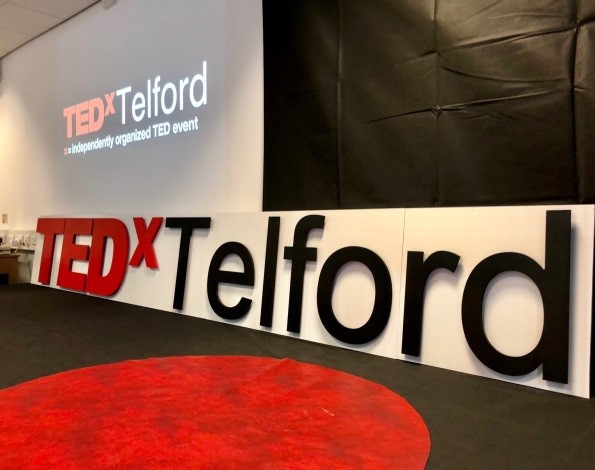
I put on the very first TEDxTelford in 2018 with 15 live speakers and 100 people in the audience and am organising a second one.  I was able to lead the organising team, coach the speakers, MC the event and get everything done in good time and inside budget and we sold out a week prior to the event. The second TEDxTelford took place in Sept 2019.

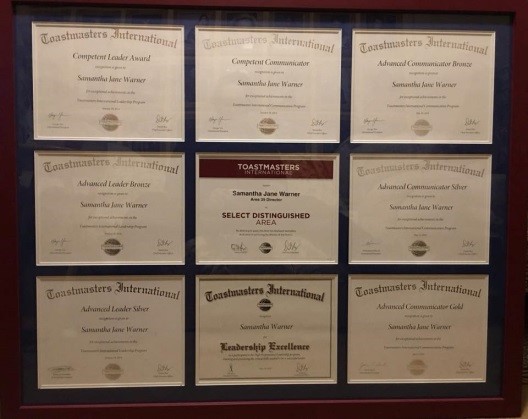
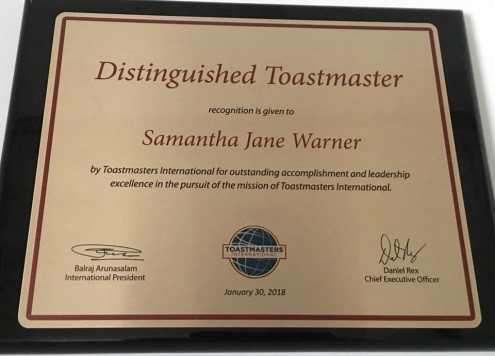
In January 2018 I achieved the highest award for all my work in Toastmasters International and can now call myself a Distinguished Toastmaster. Without doubt Toastmasters has been instrumental in my personal development and has opened many doors for me in terms of work and relationships.  I believe that in becoming self-aware I have become a nicer person to be around and I have a very full and happy life. 

Oh and did I forget to mention – I am Autistic…. J